Textile Traceability and Digital Product Passports: What Component Suppliers Should Understand Now
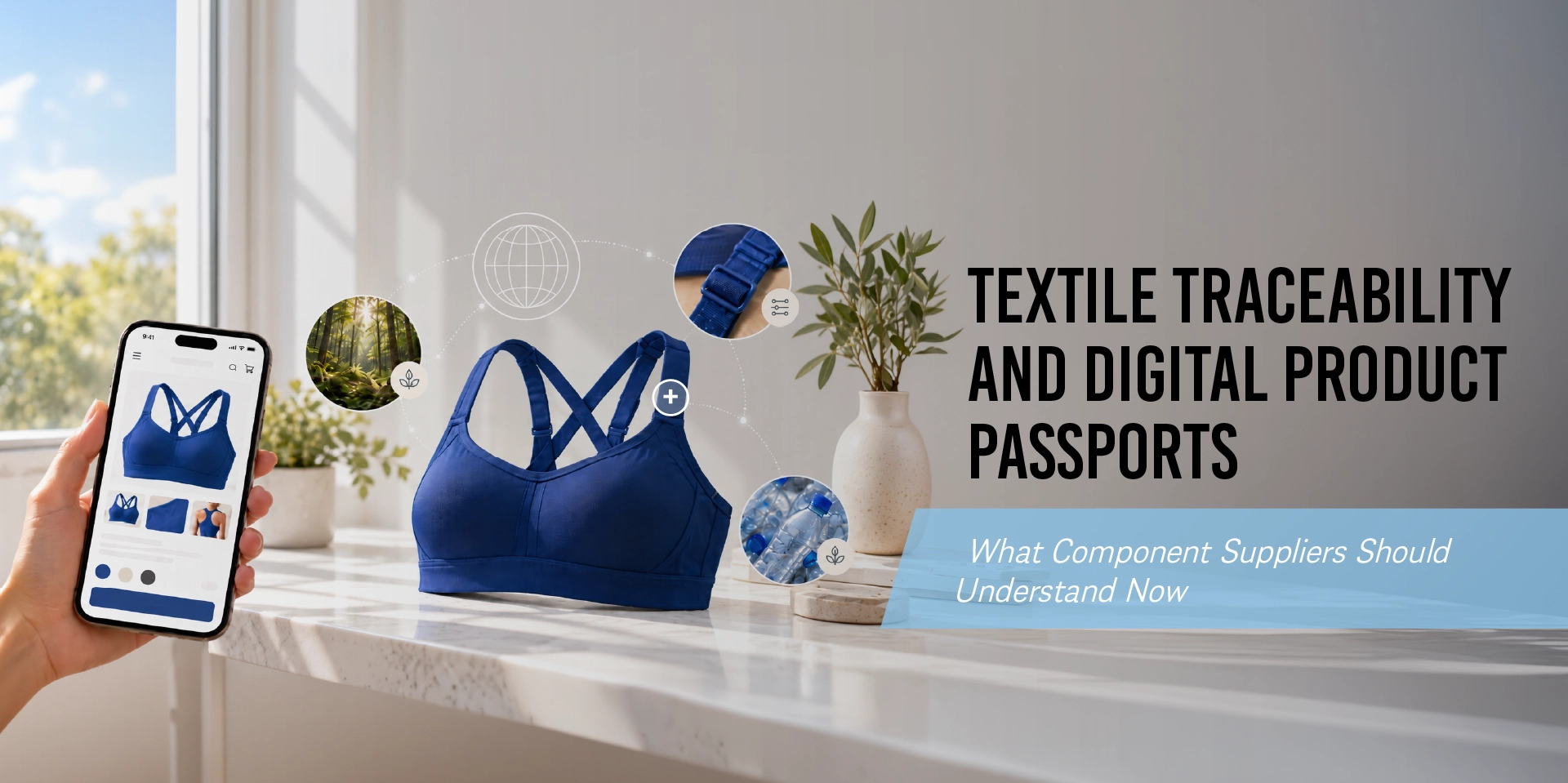
Textile traceability is becoming more important as brands ask for clearer information on material composition, recycled content and supply-chain origin, including the components used in finished garments. For ECI Elastic, this means helping customers source qualifying recycled narrow fabrics supported by Global Recycled Standard (GRS) certification and related documentation.
Today, component suppliers typically receive traceability requests through brands and Tier 1 manufacturers. These requests may cover fiber composition, certification, transaction documents, testing records and manufacturing information. Digital Product Passports (DPPs) are expected to make this information flow more structured over time.
With textile-specific DPP requirements still being developed, ECI’s focus is on maintaining reliable product information and staying aligned with evolving traceability requirements. This article explains how traceability applies to textile components, how GRS differs from DPP, and what suppliers can prepare now.
What Is Textile Traceability?
Textile traceability is the ability to identify and verify relevant information about a material or product as it moves through the supply chain.
Depending on the requirement, that information may cover fiber composition, recycled content, supplier and manufacturing origin, certification, chain-of-custody records, transaction documents and product testing. For recycled materials in particular, third-party certification remains one of the most practical ways to support verified claims.
How Does ECI Currently Support Recycled-Content Traceability?
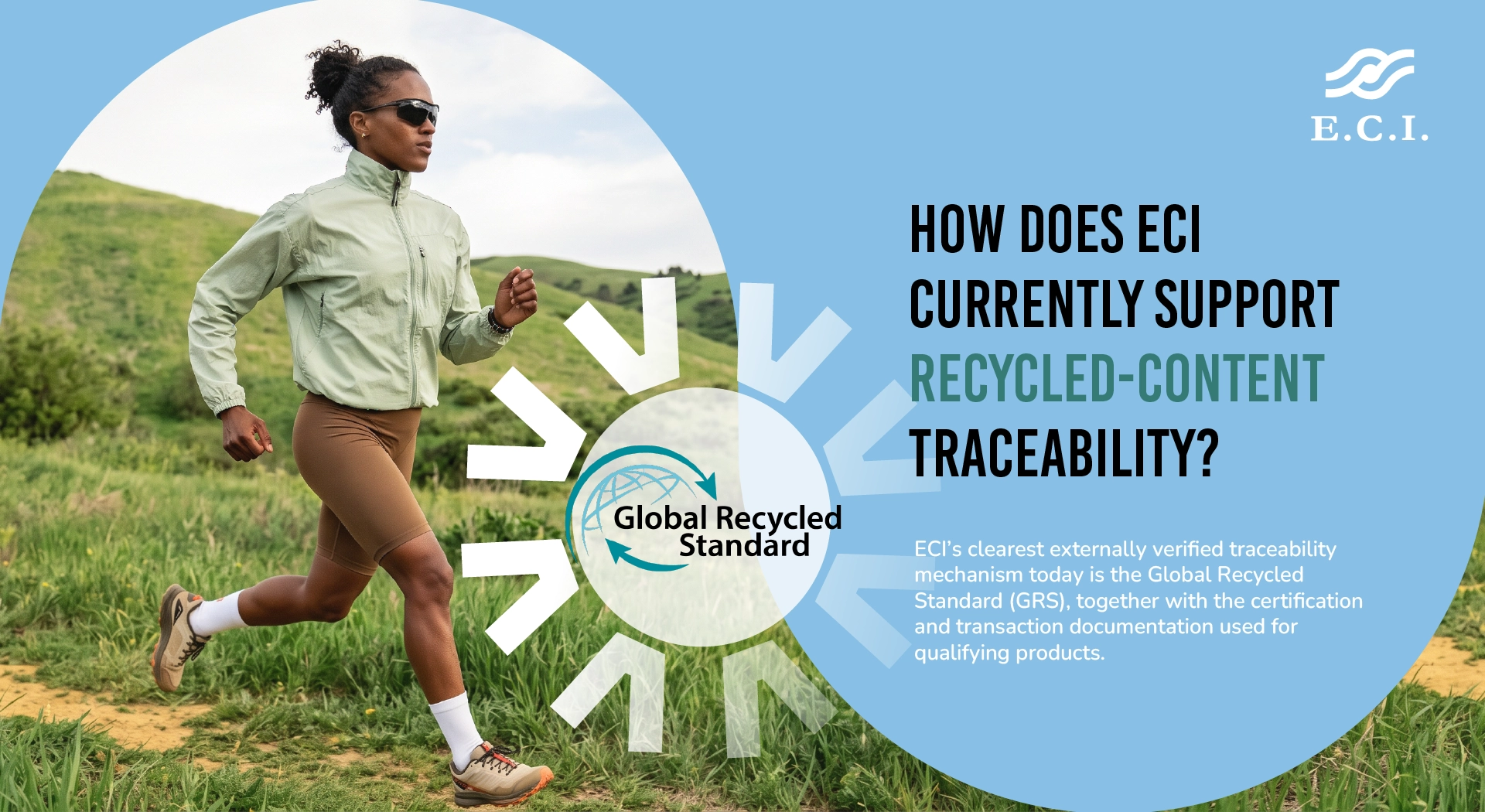
ECI’s clearest externally verified traceability mechanism today is the Global Recycled Standard (GRS), together with the certification and transaction documentation used for qualifying products.
GRS provides third-party verification of recycled content and includes chain-of-custody requirements for certified materials moving through participating supply-chain stages. ECI uses this framework when customers source applicable recycled narrow fabric products.
This is an important distinction: GRS is a verified certification-based system for specific recycled-material claims. It is not the same thing as a complete digital product traceability platform.
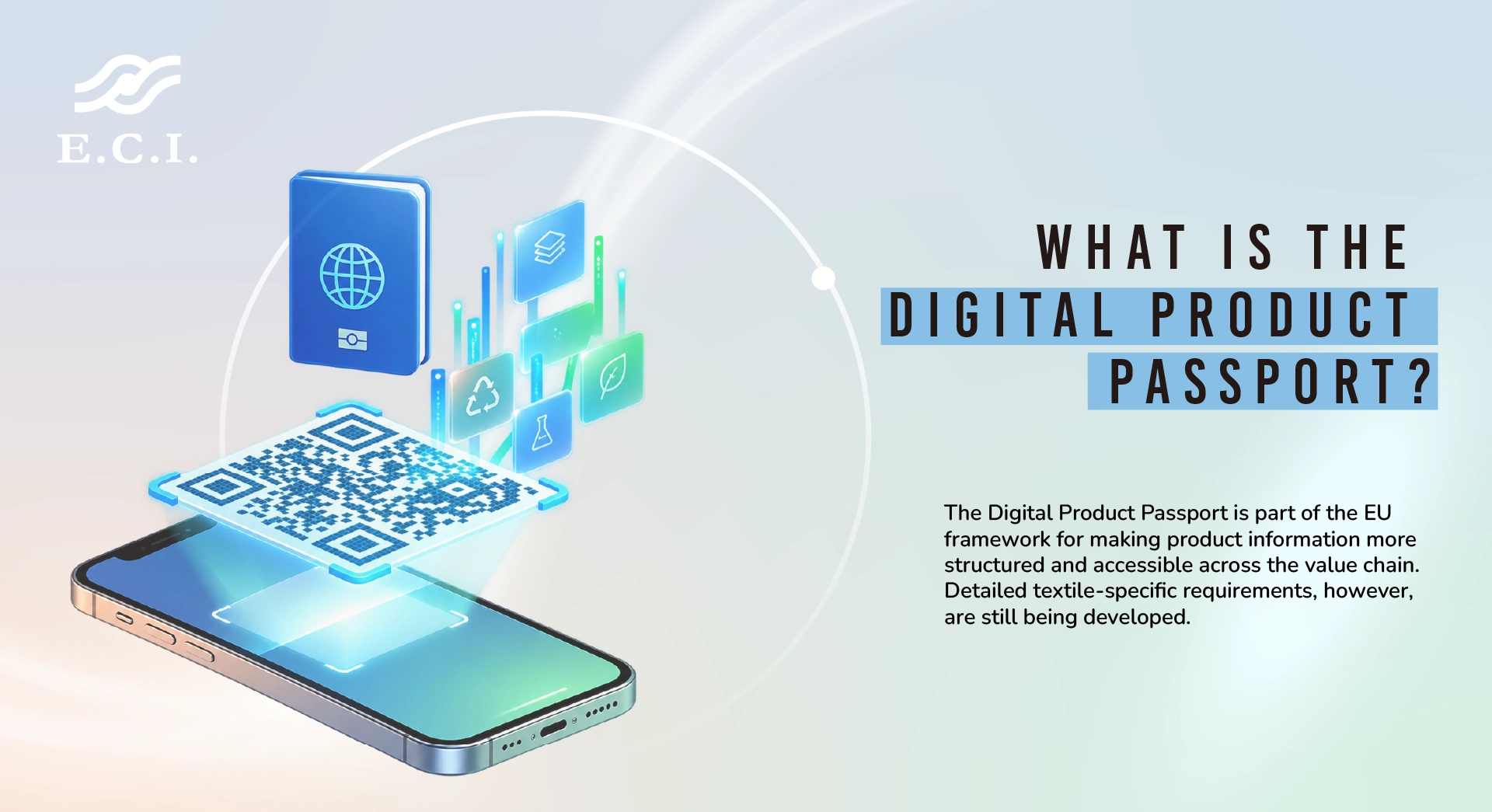
What Is the Digital Product Passport?
The Digital Product Passport is part of the EU framework for making product information more structured and accessible across the value chain. Detailed textile-specific requirements, however, are still being developed.
Textiles and apparel are among the priority product groups under the EU Ecodesign for Sustainable Products Regulation. Until the applicable textile requirements are finalized, suppliers should avoid presenting themselves as “DPP compliant”. The more useful preparation is to understand what product data already exists and how reliably it can be provided when customers ask for it.
How Is ECI Approaching Future DPP Data Requirements?
ECI’s approach is to maintain reliable product specifications, certification records and relevant product documentation, while staying aligned with evolving brand and Tier 1 data requirements.
For component suppliers, maintaining accurate information for the products they supply provides a practical foundation for responding as future traceability requirements become more structured.
As product-information requirements evolve, ECI will continue to support relevant component-level data needs through verified documentation and reliable product information.
Why Will Component Suppliers Matter?
A garment contains far more than its main fabric. If product-level traceability becomes more detailed, information from trims and other components may need to feed into the finished garment’s data set.
Elastic waistbands, binding tapes, drawcords, labels, reinforcement tapes and sewing threads all contribute to the material makeup of a product. For narrow fabric suppliers, future requests may therefore include fiber composition, recycled-material content, certification status, manufacturing location, product specifications and relevant test data. The final data set will depend on regulation and, just as importantly, on how each customer chooses to implement it.
Is GRS the Same as DPP?
No. GRS verifies defined recycled-content and chain-of-custody requirements; DPP is a broader product-information framework.
The two may overlap when a future product passport asks for verified recycled-content information, but they serve different purposes. For ECI, GRS is a current and verifiable capability. DPP is better understood as an emerging requirement that may shape how customers ask for component-level data in the future.
What Can a Component Supplier Prepare Before DPP Requirements Arrive?
Start with reliable underlying product data. Material specifications, certification records, manufacturing information and relevant testing data are more useful than building a large system before the actual customer requirements are known.
For many Tier 2 and component suppliers, implementation will depend on how brands and Tier 1 partners structure their own data systems. A practical approach is therefore to keep accurate material and certification records, know where products are made, maintain the performance data already needed for development, and monitor customer requests closely.
That approach avoids overengineering while improving readiness. It also reflects how global supply chains normally work: brands define product and compliance expectations, Tier 1 manufacturers coordinate the finished product, and component suppliers provide reliable information for the part they supply.
Frequently Asked Questions
What is the difference between current traceability practices and DPP?
Current traceability may rely on certification, product specifications and supporting documentation, while DPP is intended to provide a broader and more structured product-information framework.
What traceability capability does ECI currently have?
For qualifying recycled products, ECI’s current externally verified traceability foundation is primarily based on GRS certification and related chain-of-custody documentation.
Is GRS the same as a Digital Product Passport?
No. GRS verifies specific recycled-content and chain-of-custody requirements, while DPP is a broader product-information framework.
Are textile DPP requirements already finalized?
No. Textiles and apparel are a priority product group under the EU ESPR, but detailed textile-specific requirements are still being developed.
How may DPP-related information flow through the supply chain?
In practice, future requests may come through brands, Tier 1 manufacturers or nominated supply-chain programs, depending on how each customer builds its compliance system.
What should narrow fabric suppliers prepare now?
Reliable material specifications, certification records, manufacturing information and relevant product data provide a practical foundation for future customer requests.
From Verified Certification to Greater Data Readiness
Traceability will likely develop step by step rather than all at once. Today, certification systems such as GRS provide a credible basis for verified recycled-content claims. As product-information requirements expand, component suppliers may be asked for a broader set of structured data. ECI’s approach is to use verified systems where they already exist, maintain reliable product information and stay ready to support evolving supply-chain traceability needs.
Preparing for greater material transparency and future customer data requirements?
ECI can support applicable recycled narrow fabric programs with GRS-certified materials and related documentation, while staying aligned with evolving supply-chain traceability requirements. Write to us at service@ecigroup.com.tw
LinkedIn: https://www.linkedin.com/company/e-c-i-elastic-co-ltd/
YouTube: https://www.youtube.com/@E.C.I.ELASTIC
Facebook: https://www.facebook.com/ecigroup.tw/?locale=zh_TW
Contact us to discuss your material, certification and product-information needs.