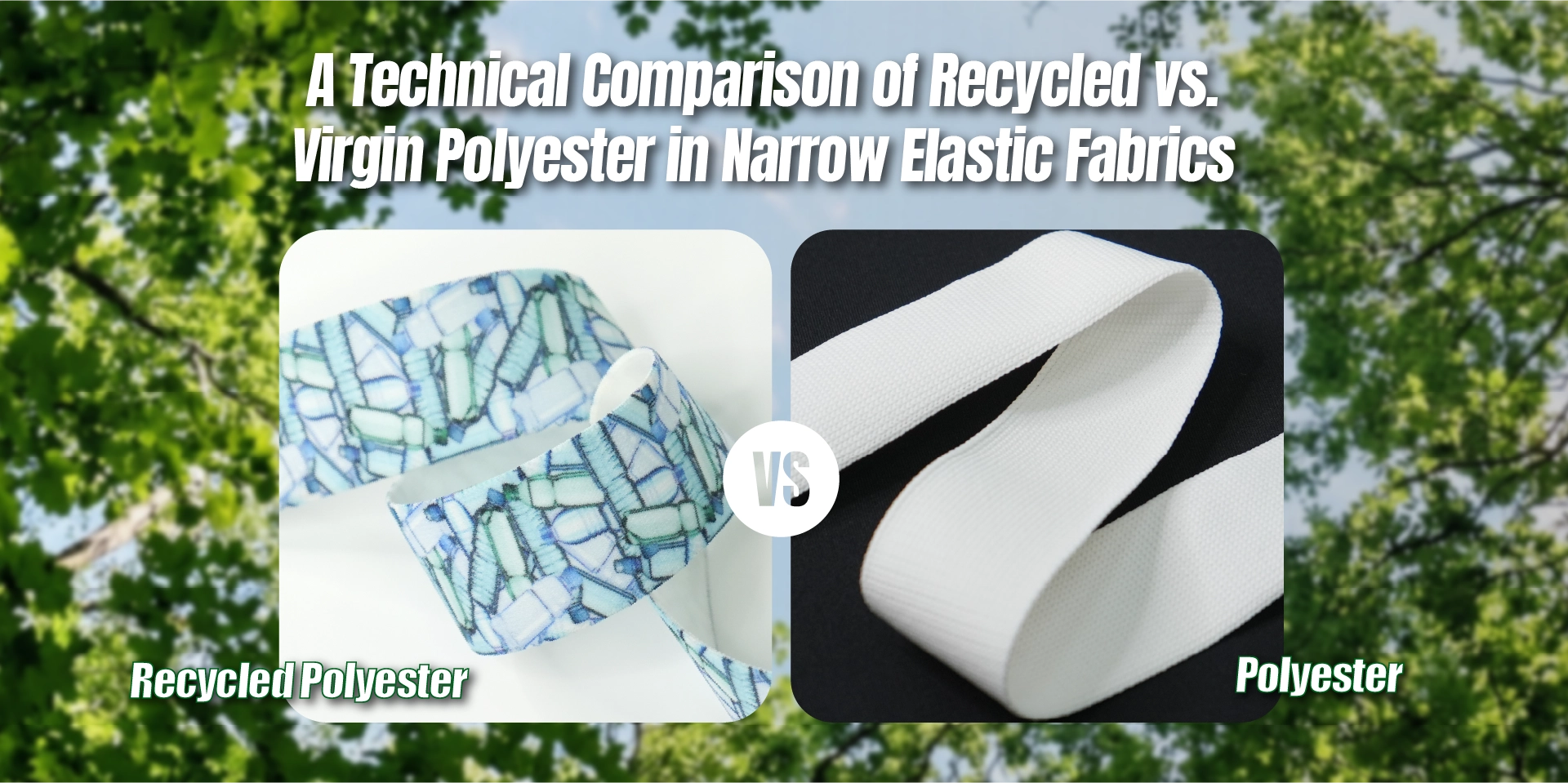
A Technical Comparison of Recycled vs. Virgin Polyester in Narrow Elastic Fabrics
In the global shift toward circular fashion, one question dominates the sourcing conversations between our engineering teams and brand partners: Does recycled polyester (rPET) compromise the tensile integrity of high-tension elastic tapes?
As a vertically integrated manufacturer, E.C.I. Elastic has conducted extensive benchmarking to answer this. By 2026, the industry consensus is clear: while virgin polyester remains the baseline for "ultimate" stability, premium recycled yarns now deliver 90-95% of the same performance metrics, making them more than sufficient for the vast majority of activewear and intimate apparel applications.
The Molecular Reality: Chemical Identity
The most critical technical takeaway for 2026 is that the chemical structure of high-quality recycled polyester is identical to that of virgin polyester—both are composed of polyethylene terephthalate (PET). When rPET is sourced from high-purity streams (such as post-consumer bottles) and processed with precision filtration, it provides the same UV resistance, moisture-wicking properties, and hand-feel as its virgin counterparts.
Tensile Strength and Durability Benchmarks
In controlled laboratory environments, virgin polyester typically holds a slight edge in pure tensile strength due to its longer, more uniform polymer chains.
- Tensile Strength: Studies indicate that fabric made from recycled fibers may show a tensile strength approximately 8-10% lower than virgin polyester.
- Durability Metrics: In high-intensity stress testing, virgin polyester can offer roughly 20-25% better durability in terms of abrasion resistance.
- Elastic Recovery: Premium recycled elastics are engineered to maintain their original dimensions even after 10,000 stretches, matching the recovery standards of luxury lingerie.
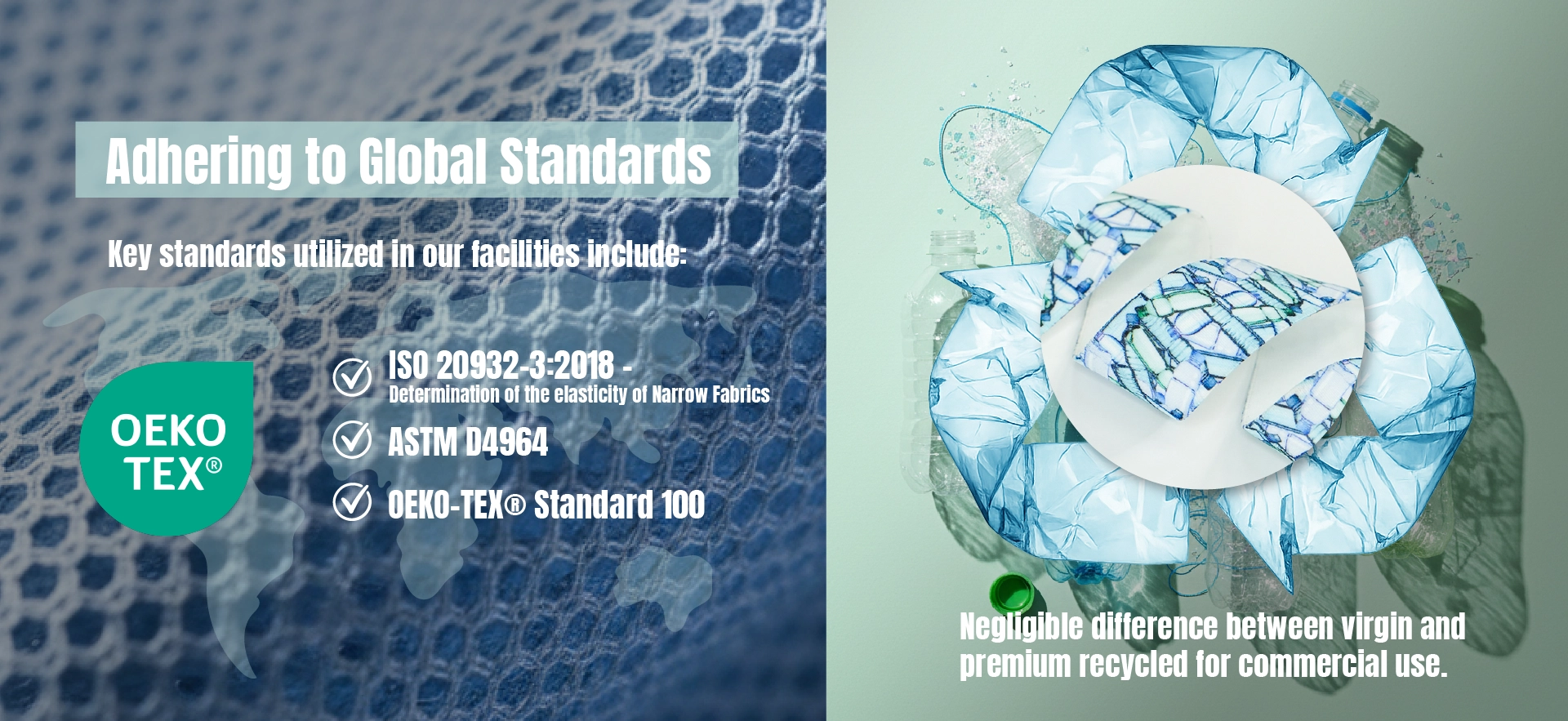
Adhering to Global Standards
To ensure consistency across our multi-site manufacturing network in Taiwan, Vietnam, and China, E.C.I. Elastic adheres to international testing frameworks. This ensures that whether a brand is sourcing a medical-grade band or a high-performance bra strap, the data is verified and repeatable.
Key standards utilized in our facilities include:
- ISO 20932-3:2018 – Determination of the elasticity of Narrow Fabrics: measuring the elasticity and related mechanical properties of narrow fabrics
- ASTM D4964: Tension and Elongation of Elastic Fabrics.
- OEKO-TEX® Standard 100: Ensuring all recycled elastics are free from harmful substances and safe for direct skin contact.
Strategic Conclusion for Brands
For ultra-performance markets where every percentage point of moisture management or modulus retention is critical, virgin polyester remains the specialized choice. However, for brands focused on balancing industry-leading performance with environmental storytelling, rPET is the clear winner.
By leveraging GRS-certified materials and our automated production lines, E.C.I. Elastic ensures that your transition to sustainable narrow fabrics is backed by hard data and a half century legacy of engineering excellence.