Back Neck Tape for T-Shirts: Complete Manufacturing & Application Guide
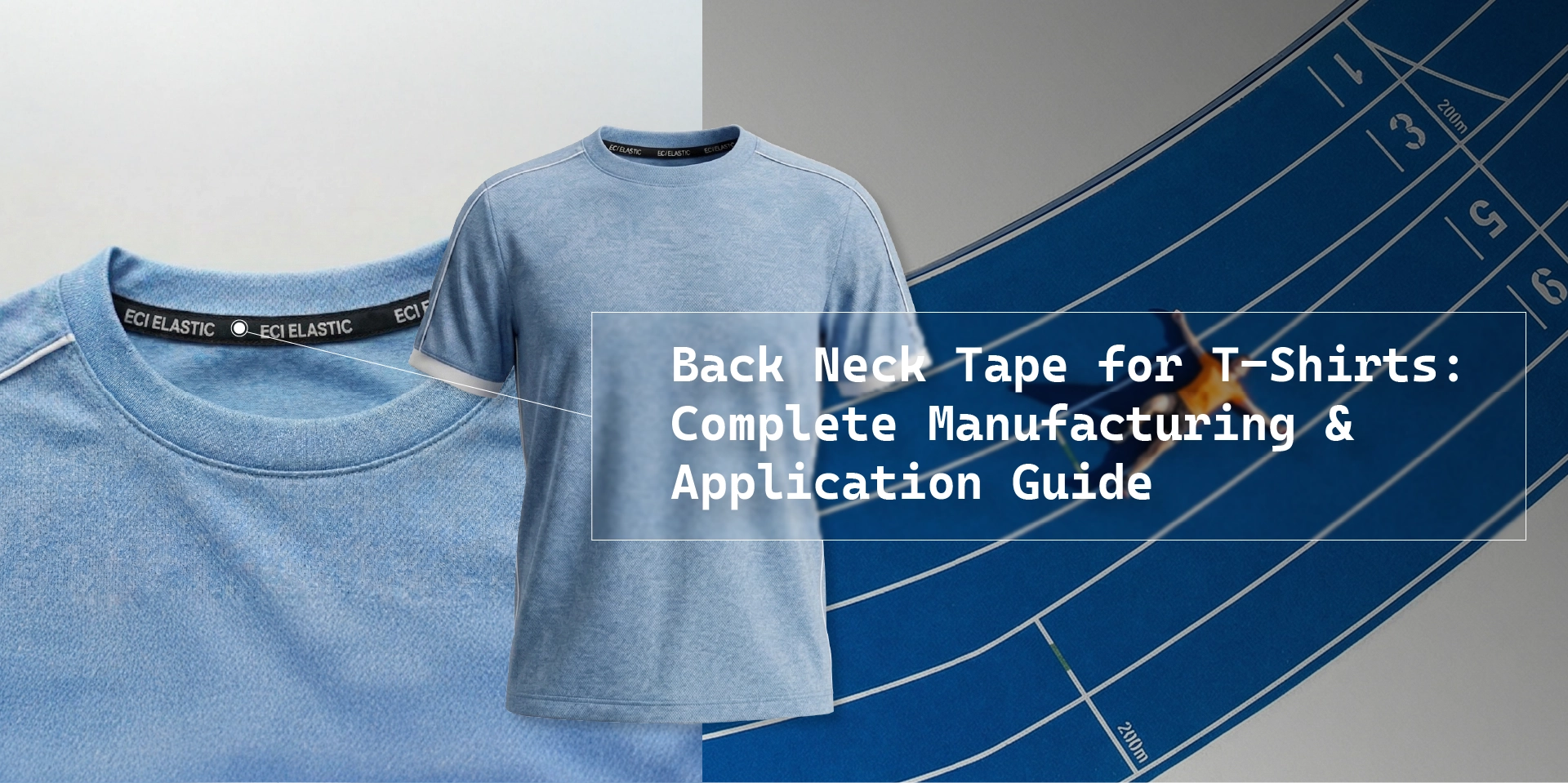
Back neck tape is one of the smallest components in a garment, yet it has an outsized impact on perceived quality. That strip of fabric covering the neckline seam on the inside of a t-shirt, polo, jersey, or sweatshirt serves multiple functions: it stabilizes the neckline against stretching, conceals raw seam edges that would otherwise irritate skin, and provides a branding opportunity that customers see every time they put the garment on.
Despite its importance, back neck tape is one of the most frequently underspecified trims in apparel production. Brands that invest time in selecting the right tape—material, width, construction, and application method—consistently produce garments that feel more refined and last longer. This guide covers everything product developers, technical designers, and sourcing managers need to know about back neck tape, from material science to manufacturing specifications.
What Is Back Neck Tape and Why Does It Matter?
Back neck tape (sometimes called neck tape, neckline tape, or collar tape) is a narrow strip of fabric applied over the seam where the neckline rib or binding meets the garment body. On a basic crew-neck t-shirt, this seam sits at the center back of the neckline—directly against the wearer’s skin.
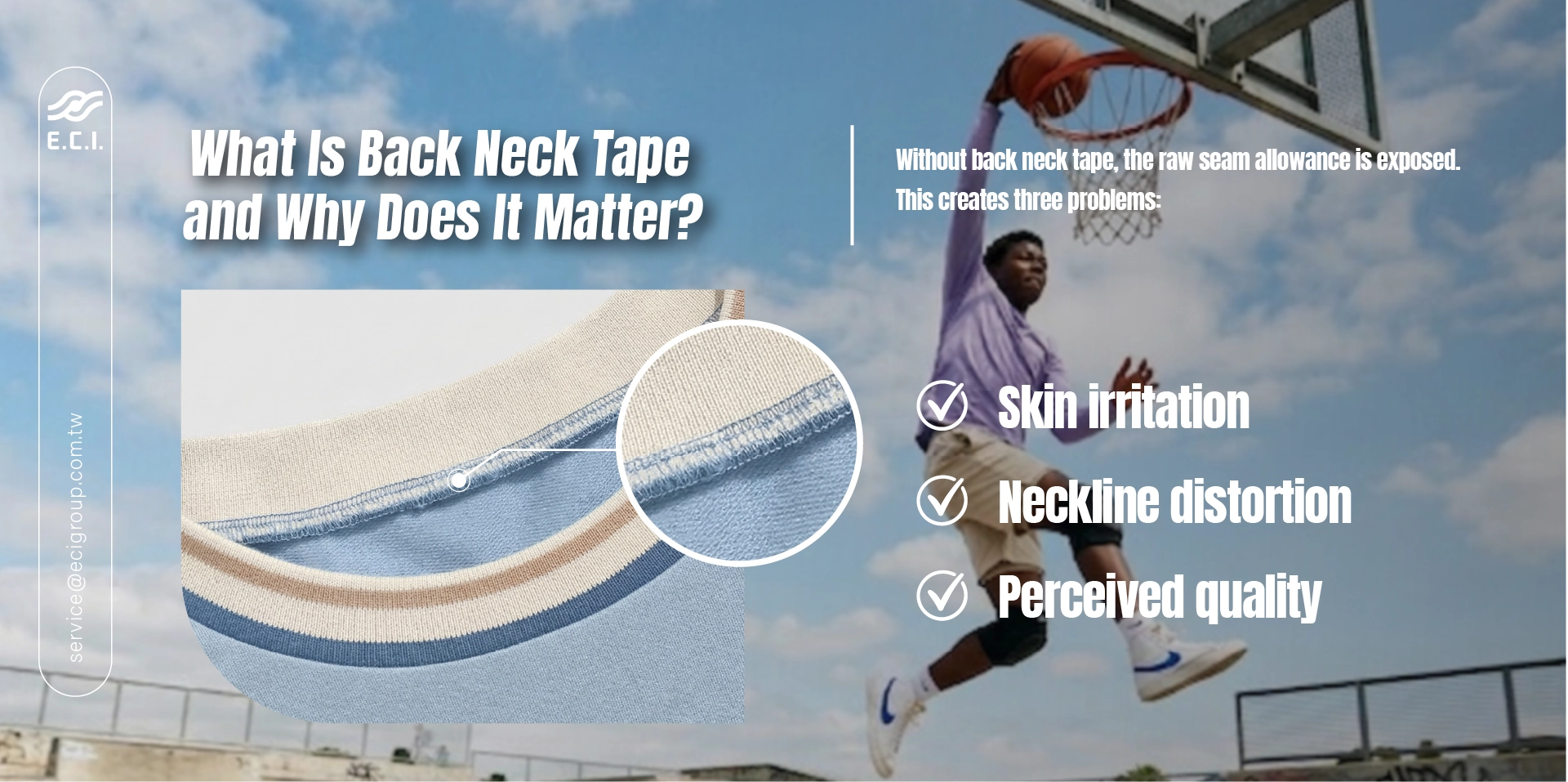
Without back neck tape, the raw seam allowance is exposed. This creates three problems:
- Skin irritation — Raw seam edges, thread tails, and care labels can chafe against the back of the neck, especially during movement or perspiration.
- Neckline distortion — The neckline seam is under constant stress from pulling the garment on and off. Without reinforcement, the neckline stretches out over time and loses its shape.
- Perceived quality — A cleanly taped neckline signals professional manufacturing. Consumers may not consciously notice it, but they notice its absence—a rough, unfinished neckline interior reads as cheap construction.
For brands competing on fit, comfort, and durability, back neck tape is not optional. It is a functional and aesthetic requirement.
Types of Back Neck Tape
Not all back neck tapes are the same. The right choice depends on the garment type, fabric weight, target price point, and whether the tape will carry branding. Here are the primary categories:
1. Woven Back Neck Tape
Woven tapes have a structured, crisp hand with minimal to zero stretch. They are produced on narrow fabric looms using interlaced warp and weft yarns, typically in a twill or herringbone weave structure. Woven back neck tape is the most common type used in standard t-shirts, polos, and casual wear. It holds its shape well over repeated wash cycles and provides firm neckline stabilization.
Best suited for: crew-neck and V-neck t-shirts, polos, dress shirts, uniforms, and woven garments.
2.Knit Back Neck Tape
Knit tapes are produced on crochet knit, warp knit or circular knit machines and offer inherent stretch. This makes them more conformable to curved neckline shapes and more comfortable against skin, especially in stretch fabrics. Knit back neck tape is increasingly popular in performance apparel and activewear where the garment fabric itself is a knit with mechanical stretch or elastane content.
Best suited for: activewear, performance jerseys, stretch knits, and garments where the neckline tape needs to move with the fabric.
3.Elastic Back Neck Tape
Elastic versions incorporate elastance or rubber yarns to provide controlled stretch and recovery. These tapes are engineered to specific elongation percentages, allowing the neckline to stretch during on/off without losing recovery. Elastic back neck tape is used in high-stretch activewear, compression garments, and swimwear.
Best suited for: activewear, yoga wear, compression garments, swimwear, and any garment with a neckline that must stretch significantly during wear.
4.Heat-Transfer (Tagless) Back Neck Tape
Heat-transfer neck tape integrates the size label, care instructions, and brand logo directly into the tape via heat-applied graphics. This eliminates the need for a separate sewn-in label, creating a completely tag-free interior. Heat-transfer back neck tape has become the standard for premium basics, athletic brands, and any garment marketed as “tagless.”
Best suited for: premium basics, athleisure, children’s apparel, and any brand pursuing a tagless construction.
Material Composition: What Makes a Good Back Neck Tape?
The base materials used in back neck tape affect everything from hand feel to wash durability. Here is how the most common materials compare:
|
Material |
Characteristics |
Advantages |
Considerations |
|
Polyester |
Smooth, durable, resistant to shrinkage and wrinkling |
Excellent colorfastness, dimensional stability, low cost |
Can feel synthetic against skin at lower quality grades |
|
Spun Polyester |
Soft hand feel similar to cotton, with polyester durability |
Comfort approaching cotton, better shrinkage resistance than cotton |
Slightly higher cost than filament polyester |
|
Nylon |
Strong, lightweight, smooth surface |
Excellent drape, soft against skin, good for stretch blends |
Less UV-resistant than polyester |
|
Recycled Polyester (rPET) |
Same performance as virgin polyester, made from post-consumer or post-industrial waste |
Meets sustainability requirements, GRS-certifiable |
Requires verified chain-of-custody documentation |
|
Nylon/Spandex Blend |
Stretch and recovery with smooth surface |
Moves with stretch fabrics, excellent for activewear |
Higher cost, requires specific sewing parameters |
For most mainstream t-shirt and casualwear applications, a spun polyester or polyester blend offers the best balance of comfort, durability, and cost. Brands with sustainability commitments should explore recycled polyester options, which now match virgin polyester in performance.
Technical Specifications: What to Specify When Ordering
When sourcing back neck tape, product developers need to specify these parameters clearly to avoid mismatches between the tape and the garment:
- Width:Standard back neck tape widths range from 10 mm to 15 mm (approximately 3/8” to 5/8”). For lightweight t-shirts, 10–12 mm is typical. Heavier garments like sweatshirts and outerwear may use tapes up to 20–25 mm wide to cover broader seam allowances. Branded tapes with printed logos often require 15 mm or wider to accommodate the artwork.
- Stretch Capacity:Non-stretch tape (0% elongation) is standard for woven shirts and most casual cotton or CVC t-shirts. Light-stretch tape (5–10% elongation) is common for knit t-shirts and polos. Performance activewear may require engineered elastic tapes with 20–40% stretch to match the body fabric’s elongation. Always match the tape’s stretch profile to the garment fabric—a rigid tape on a stretch neckline will pucker, and a stretchy tape on a woven neckline will bubble.
- Surface Finish:The surface texture matters for both comfort and print adhesion. Smooth twill weaves are the default for clean-looking tape. Herringbone weaves provide a subtle textural pattern. Brushed or soft-touch finishes improve skin comfort for premium products. If heat-transfer labeling will be applied, the surface must be smooth enough for the transfer to adhere cleanly.
- Color and Branding:Standard tape is available in black, white, and navy. Custom Pantone color matching is available for brands that want the tape to match or complement the garment color. Branding options include woven-in logos (produced during the weaving process), screen-printed logos, digitally printed logos, and heat-transfer labels. Woven-in logos are the most durable and premium, while printed options offer faster setup and lower minimums.
How Back Neck Tape Is Applied: Manufacturing Methods
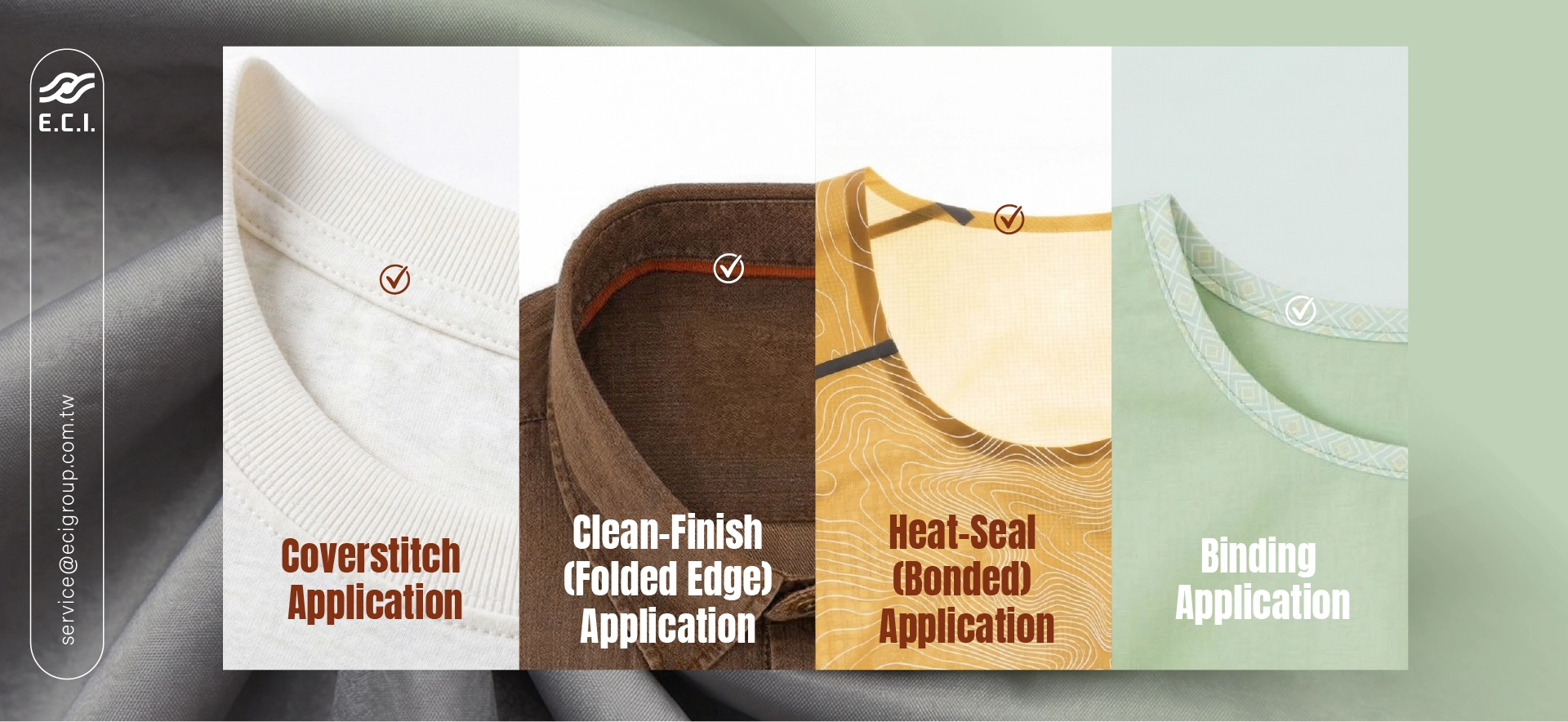
The application method determines how the tape is attached to the garment neckline. Each approach has trade-offs in speed, durability, appearance, and cost:
- Coverstitch Application (Most Common):The tape is folded over the raw seam allowance and secured with a coverstitch (two or three needle rows on the face, a looper stitch on the reverse). This is the industry standard for t-shirts, polos, and most knitwear. It is fast, durable, and provides a clean finish on both the inside and outside of the garment. The visible coverstitch rows on the garment exterior also serve as a design detail.
- Clean-Finish (Folded Edge) Application:The tape edges are folded inward before stitching, creating a completely finished appearance with no raw edges visible. This method is common in premium and luxury garments where the interior finish is a selling point. It requires slightly more production time but delivers a noticeably refined result.
- Heat-Seal (Bonded) Application:The tape is bonded to the garment using heat and pressure, with no stitching required. Heat-seal tape has a thermoplastic adhesive backing that activates under heat. This creates a smooth, stitch-free interior—ideal for performance and outdoor garments where flat seam construction minimizes chafing. It is also used in waterproof garments where needle holes in the seam would compromise water resistance.
- Binding Application:The back neck tape wraps around the raw edge of the neckline and is stitched through all layers in a single pass using a binding attachment. This is common in casual and value-priced garments. It is the fastest application method but produces a visible fold on the garment exterior.
Common Back Neck Tape Defects and How to Prevent Them
Even well-specified tape can fail at the application stage if sewing parameters are not calibrated correctly. These are the most frequent defects:
|
Defect |
Cause |
Prevention |
|
Tape puckering |
Tape stretch profile mismatched to fabric; excessive sewing tension |
Match tape stretch to fabric stretch; calibrate machine tension; test before bulk production |
|
Neckline waviness |
Tape applied with too much tension, pulling the neckline inward |
Apply tape with neutral tension; use template guides for consistent application |
|
Tape edge curling |
Narrow tape with raw edges not properly secured |
Use wider tape or fold-edge application; select tape with finished edges |
|
Delamination (heat-seal) |
Insufficient heat/pressure or contaminated surface during bonding |
Calibrate press settings per supplier specs; ensure clean fabric surface before bonding |
|
Print peeling |
Poor adhesion between heat-transfer graphic and tape surface |
Use compatible tape surface (smooth, non-brushed); test wash durability before production |
|
Color bleeding |
Insufficient colorfastness in tape dye |
Source tapes with tested colorfastness (ISO 105-C06); request test reports before bulk order |
The most effective prevention strategy is to request pre-production approval samples sewn on the actual garment fabric, using the actual sewing equipment and parameters. This catches compatibility issues before bulk production begins.
Spotlight: ECI Elastic’s Back Neck Tape Capabilities
At ECI Elastic, back neck tape is one of our core product categories. As a vertically integrated narrow fabric manufacturer with over 50 years of production experience, we control every stage from yarn preparation through weaving, dyeing, finishing, and printing.
Our back neck tape range includes:
- Woven tapes in twill and herringbone structures, from 10 mm to 25 mm widths
- Knit tapes with engineered stretch for activewear and performance apparel
- Branded tapes with woven logos, screen-printed logos, silicone-printed logos, and heat-transfer label integration
- Sustainable options including recycled polyester (rPET) and spun polyester blends
- Custom color matching to Pantone specifications with verified colorfastness
Browse our full back neck tape range, or contact our team to request samples for your project.

How to Choose the Right Back Neck Tape for Your Garment
Selecting back neck tape involves matching the tape’s properties to the garment’s fabric, construction, and end-use. Use this decision flow:
1.Identify the garment fabric type. Woven fabrics pair with non-stretch woven tape. Stretch knits pair with knit or elastic tape. The tape should have a stretch profile similar to or slightly less than the garment fabric.
2.Determine the seam allowance width. The tape should be wide enough to fully cover the seam allowance plus 1–2 mm on each side. For a 10 mm seam allowance, a 12–15 mm tape is appropriate.
3.Decide on branding. If the tape will carry a logo or replace the care label (tagless construction), select a tape width and surface finish that supports your branding method.
4.Match the application method to production capabilities. Coverstitch is the most universal. Heat-seal requires specific equipment. Confirm your garment factory’s capabilities before specifying.
5.Request a sewn sample. Always evaluate the tape sewn onto the actual garment fabric before approving for bulk. Check for puckering, neckline distortion, surface smoothness, and wash durability through at least five home laundry cycles.
Ready to Specify Back Neck Tape for Your Next Collection?
The right back neck tape turns an invisible trim into a quality differentiator. Whether you are developing a new t-shirt line, upgrading your activewear neckline construction, or transitioning to tagless branding, the specifications matter.
ECI Elastic manufactures back neck tape for some of the world’s leading apparel brands. To explore our range, view our back neck tape products, or request a sample kit to evaluate the materials firsthand.
OTHER NEWS

What Does SS27 Mean? Fashion Season Codes and the Designer Vocabulary That Comes With Them

Inside the 2026 FIFA World Cup Jerseys: How Recycled Warp Knit Tapes Are Redefining Performance Sportswear