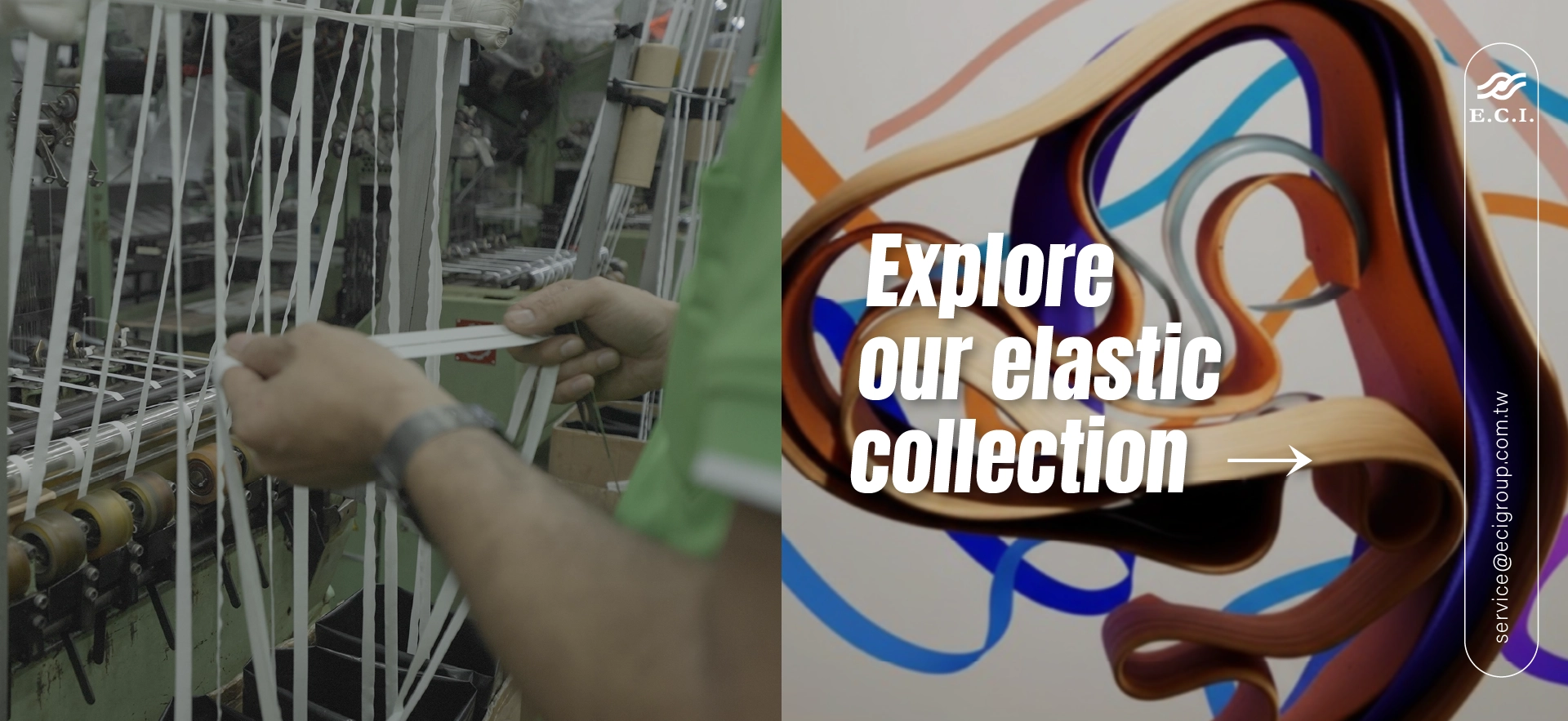
Beyond the Weave: Navigating the Technical Divide Between Elastic and Non-Elastic Tapes
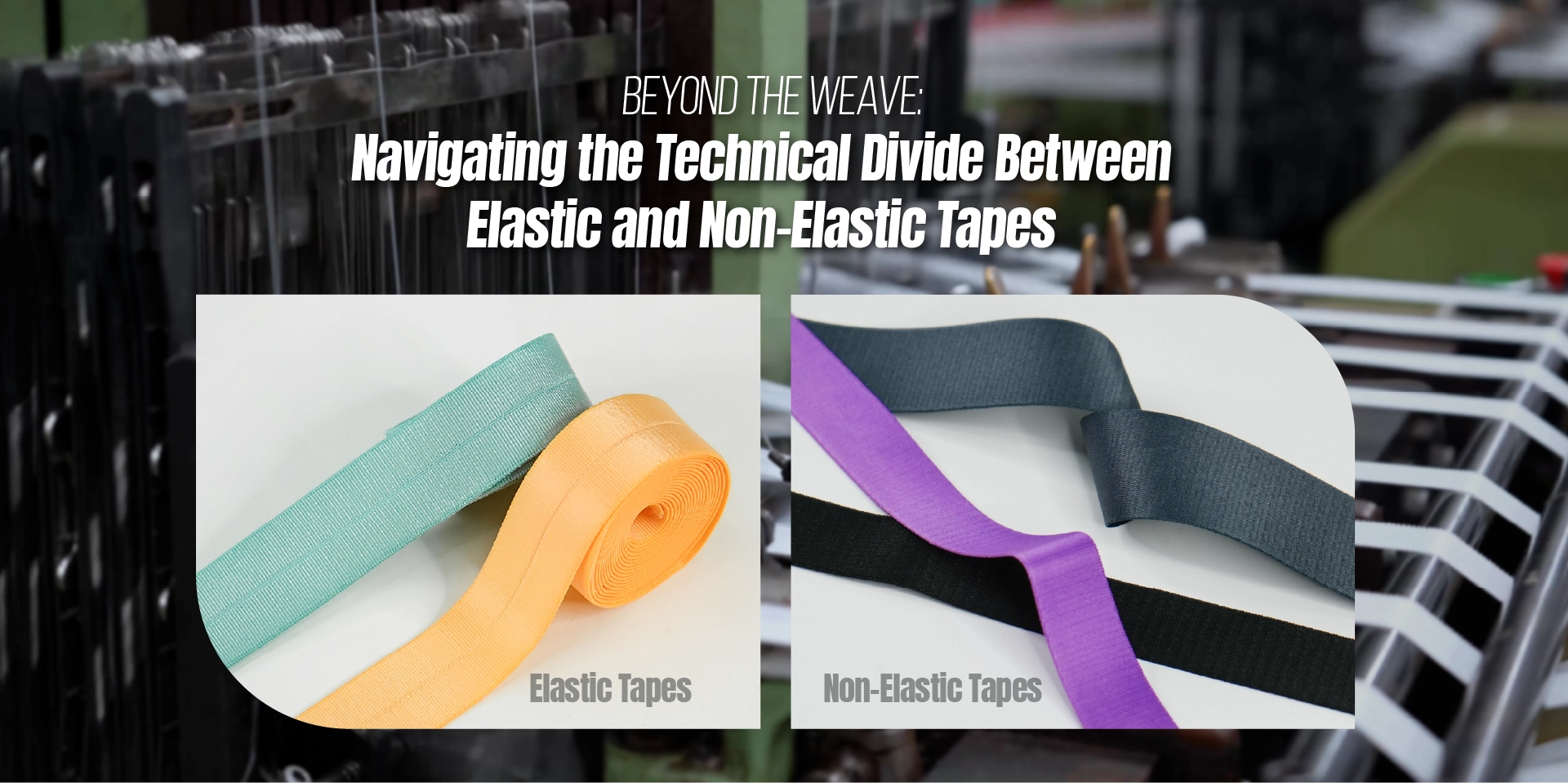
In the precision-driven world of textile engineering, a common misconception among product developers is that all narrow fabrics behave with the same dimensional predictability. However, the technical reality reveals a stark divide: while non-elastic trims are relatively inert, elastic tapes containing elastane present significantly higher manufacturing hurdles.
Understanding the physics of these materials—and why elastics require a far more sophisticated level of engineering expertise—is the difference between a seamless assembly line and a costly production halt.
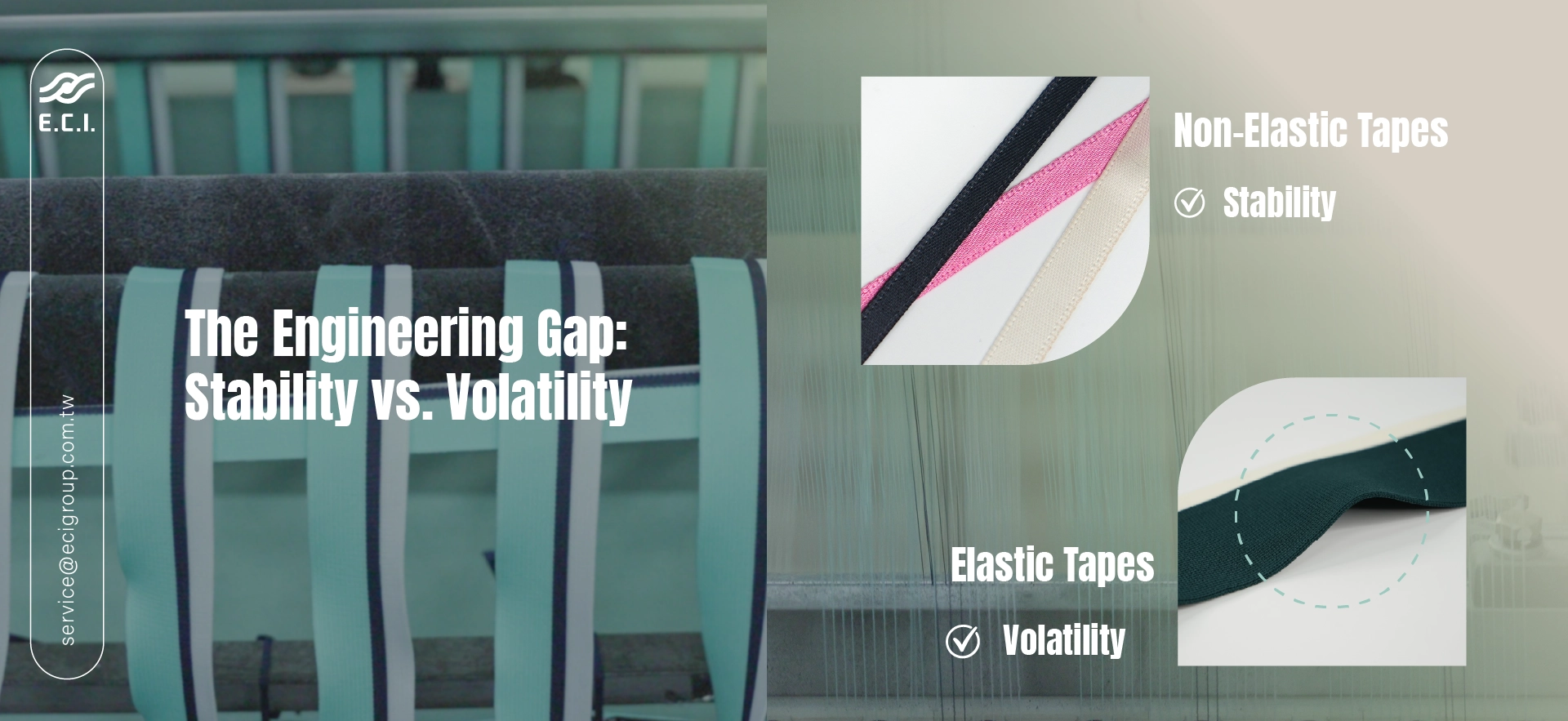
The Engineering Gap: Stability vs. Volatility
The primary challenge in narrow fabric production is the fundamental difference in stress-strain relationships. Non-elastic tapes, typically constructed from polyester, nylon, or cotton, possess a mostly linear behavior. Once woven and heat-set, they remain dimensionally stable under standard tension.
Elastic fabrics, however, can exhibit up to ten times the deformation of conventional textiles. This non-linear behavior is further complicated by stress relaxation, where elastane fibers lose tension over time when subjected to sustained elongation or environmental stressors like heat and humidity. Without rigorous batch testing using Constant Rate of Elongation (CRE) testers, elastic components can fluctuate in quality from one roll to the next, leading to inconsistent fit and performance in the final garment.
The "Curving" Crisis: A Study in Tension Memory
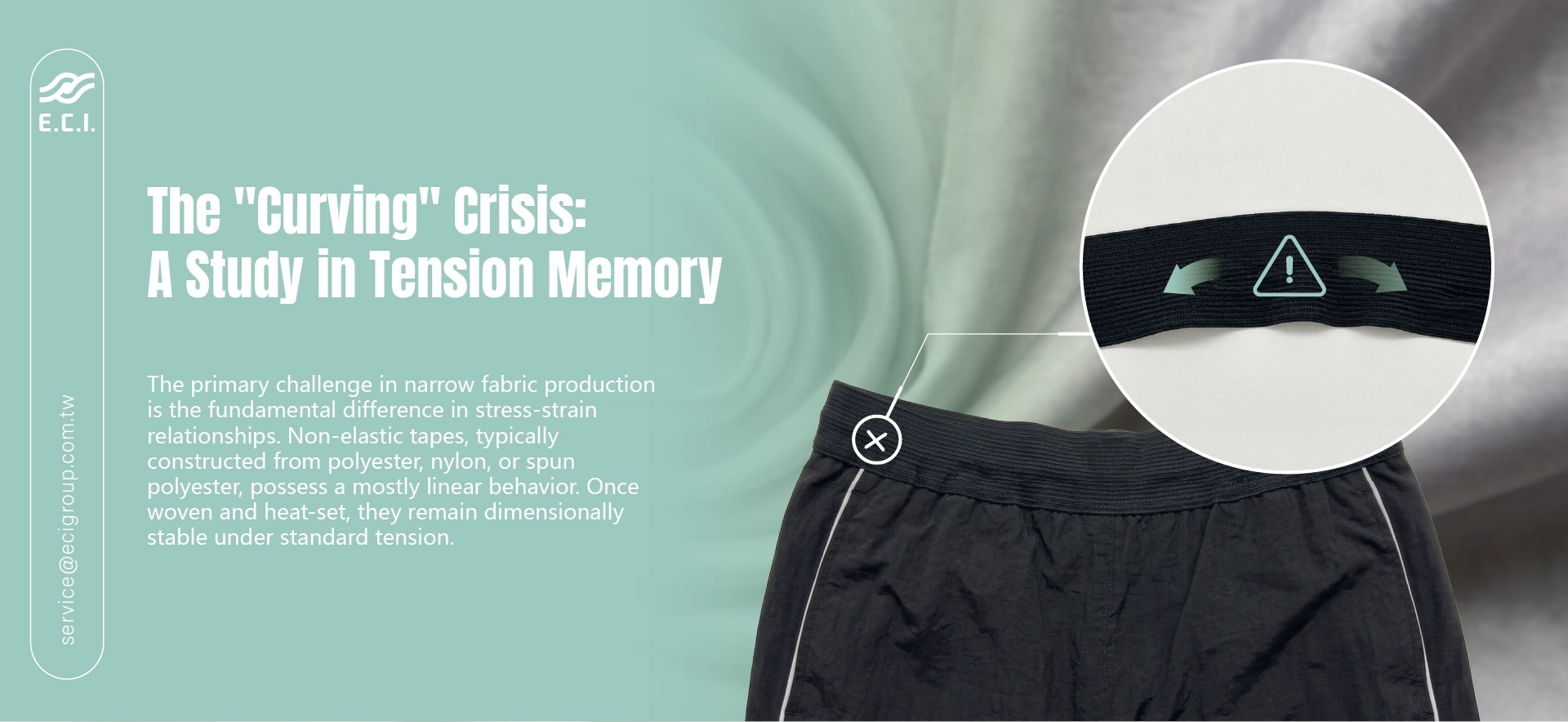
A critical example of this complexity occurs when an elastic tape refuses to lay flat upon unrolling—a phenomenon known as "curving" or "bowing." This is rarely a defect in the weave itself; rather, it is a result of radial tension memory.
In standard production, elastics are often wound tightly onto rolls for shipping. Because elastane is sensitive to pressure, the inner layers of the roll can "set" in a curved state. When these rolls reach an automated sewing line, the tape unspools with a persistent physical memory of the roll's curvature. Even a few millimeters of deviation can jam automated folders or cause "feed-dog obstruction," where the tape fails to align with the needle path.
Resolving issues like this requires more than a material swap — it requires a manufacturing partner who understands the full journey from production winding to assembly line performance. ECI's technical team works directly with brands to diagnose the problem and find the right solution.
Strategic Takeaways for Technical Developers
To maintain high-speed production integrity, technical teams should move beyond basic material specifications and prioritize the following:
- Specify Working Elongation Range: Always design around a "working range" (typically 70–80% of total stretch) rather than maximum capacity to avoid permanent deformation known as "creep".
- Verify Relaxation Protocols: Ensure your manufacturing partner utilizes a triple relaxation process to fully release internal weaving tension before the material is packed.
- Prioritize Dimensional Stability: For automated lines, the ability of a tape to remain flat and bow-free is as critical as its tensile strength.
- Analyze the Feeding Mechanics: Share your automated feed-rates and folder dimensions with your supplier to ensure the packaging method matches your machine's requirements.
In modern manufacturing, the most valuable partner is one who looks past the spec sheet and understands the physics of how a material behaves when the machines start running. By managing the complexities of elastane variance, technical teams can transform potential production crises into streamlined, high-speed successes.
Work With ECI's Technical Team
ECI has been engineering narrow elastic solutions for the world's leading lingerie, activewear, and intimate apparel brands for over 50 years. Our team works directly with product developers, R&D engineers, and production partners to match the right material construction, packaging format, and processing protocol to each application — before issues reach the line.
Whether you're troubleshooting an existing problem, developing a new elastic specification, or evaluating suppliers for an upcoming season, we're built for that conversation. Contact our technical team to arrange a consultation.