Drawcord vs. Drawstring: Key Differences, Uses and How to Choose

What Is the Structural Difference Between a Drawcord and a Drawstring?
In garment design and prototyping, product developers and sourcing teams frequently refer to waistband and hood closures under the broad umbrella of "drawstrings." In technical narrow fabric manufacturing, however, the two terms are often used to describe different constructions built for different jobs.
Drawstrings are primarily thin, flat woven tapes or ribbons (often produced via plain, twill, or flat braided structures). Their purpose is to provide unobtrusive, low-profile cinching with minimal skin irritation. In contrast, Drawcords are engineered as three-dimensional circular braided ropes, frequently reinforced with an internal core. Drawcords are specifically designed to deliver tensile strength, dimensional stability, abrasion resistance, and knot security under active movement.
What Makes a Drawcord Hold? Three Engineering Factors
The functional performance and locking capability of an apparel cord depend on three core structural variables: core construction, braid density, and yarn configuration.
- Core construction: Hollow braids offer a soft hand feel and fluid drape, ideal for casual lifestyle pieces. Solid core braids (incorporating textured polyester or continuous filament cores) prevent cross-sectional flattening under heavy tension, providing the essential rigidity required for technical gear.
- Braid density: Circular braiding machines with high pick-per-inch settings create dense outer sleeves that resist surface snagging, abrasion against metal eyelets, and repeated laundering wear.
- Yarn configuration: Combining high-tenacity filament yarns, dope-dyed polyester, or GRS-certified recycled yarns directly influences friction coefficients, breaking strength, and weather resistance.
Engineering Case Study: Why Basketball Shorts Require Braided Drawcords in Knitted Mesh Waistbands
A clear example came from a joint development project with a global athletic brand. When developing knitted mesh waistbands for performance basketball shorts, the brand's technical specification ruled out flat drawstrings and required a heavy-gauge round braided drawcord instead.
Three practical factors explain this requirement:
1. Holding the Waistband Through Sudden Stops and Jumps: Basketball involves hard deceleration, multi-directional cutting and vertical jumping. As players sweat, the shorts absorb moisture and get heavier. Flat tapes tend to slip under changing tension, while round braided cords hold a knot more securely, keeping the waistband in place as the wet garment pulls downward.
2. Eliminating Twisting Inside the Mesh Channel: Knitted mesh waistbands feature open, supple cellular structures. Flat drawstrings subjected to localized tension or laundry agitation twist into helical spirals inside the tunnel, causing uneven constriction and discomfort. Symmetrical circular drawcords distribute pressure evenly at 360 degrees, sliding smoothly without rolling.
3. Structural Support for Open Mesh: While open-work knitted mesh ensures maximum ventilation and heat dissipation, its flexible nature requires an internal backbone. A structured braided cord provides the essential structural support that prevents the waistband from collapsing or sagging when tightened.

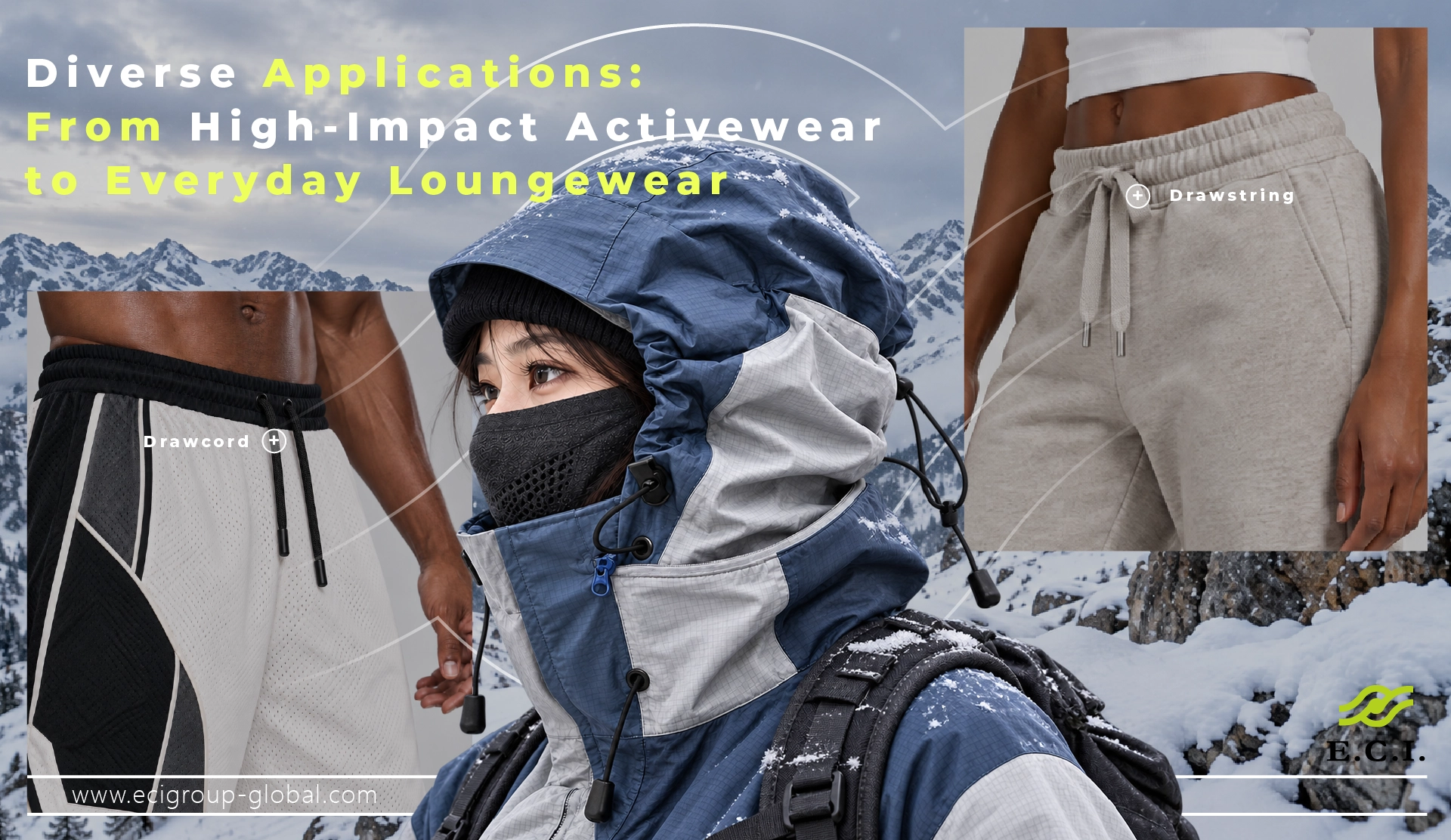
Diverse Applications: From High-Impact Activewear to Everyday Loungewear
By adjusting braiding density, core construction, and finishing techniques, apparel manufacturers can match cords to exact performance tiers:
Sportswear & Performance Activewear
- Basketball shorts, training shorts, compression run shorts, and track pants.
- Dynamic knot retention, moisture resistance, anti-twisting profile, high tensile strength, and secure fit during explosive movement.
- 5mm–7mm heavy-gauge circular braided cords with solid polyester cores and anti-slip silicone dipped or textured aglets.
Technical Outerwear & Storm Hoodies
- Heavyweight hoodies, mountain windbreakers, and alpine shell adjustment systems.
- Weather resistance, abrasion resistance against cord locks, and architectural drape.
- 4mm–5mm round cords paired with matte black or gunmetal zinc-alloy aglets, featuring reflective filament tracer yarns.
Everyday Casual & Loungewear
- Pajama pants, lightweight board shorts, children's casual wear, and laundry bags.
- Skin-friendly softness, lightweight construction, low-profile knotting, and ease of washing.
- 10mm–15mm flat woven drawstrings or ultra-soft cotton tubular ribbons with folded sewn ends or heat-sealed tips.
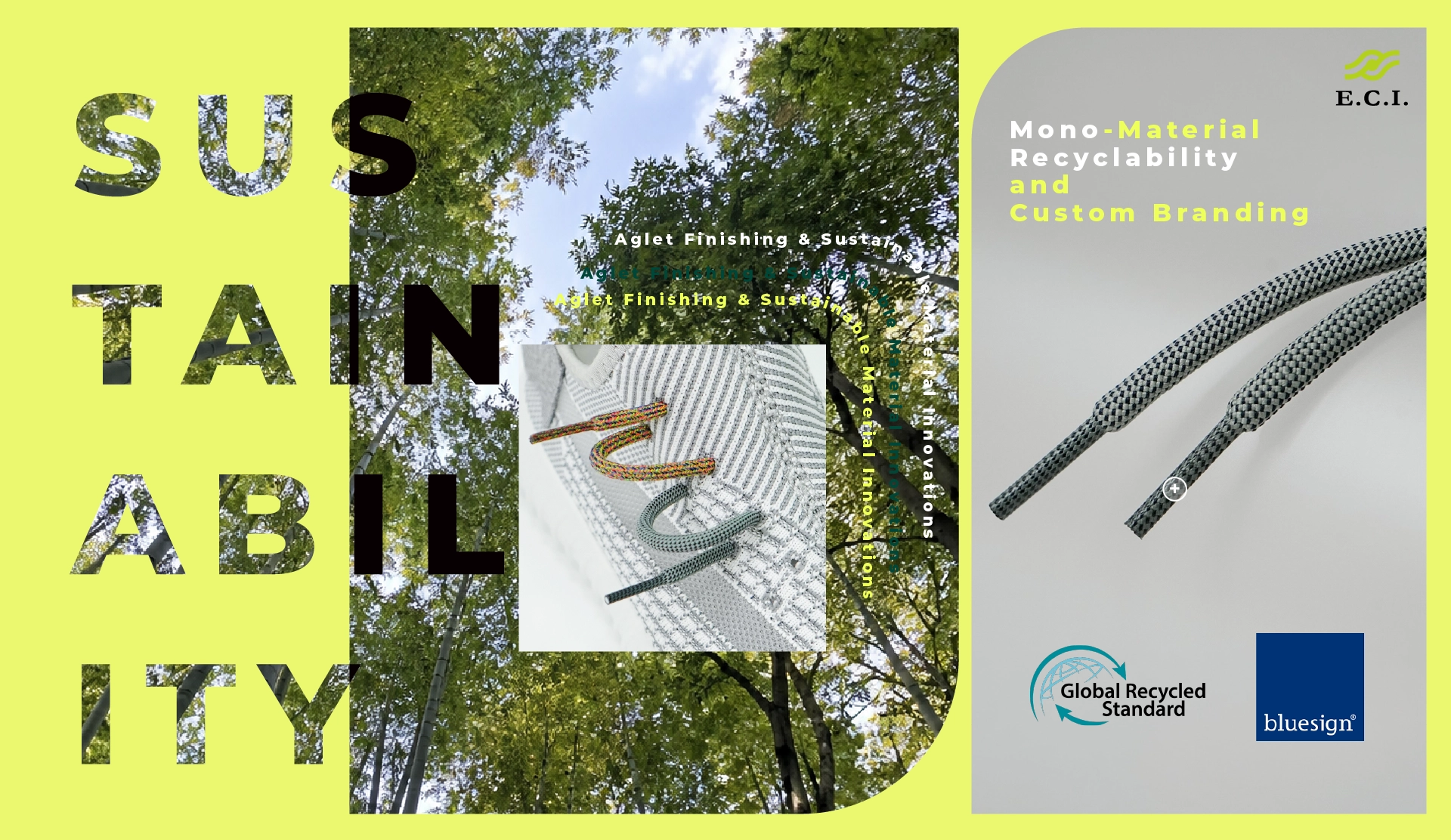
Aglet Finishing & Sustainable Material Innovations: Mono-Material Recyclability and Custom Branding
In functional garment engineering, the aglet (cord tip) does far more than ease threading through eyelets—it defines tactile perception, durability, and brand sustainability. ECI Elastic delivers comprehensive tipping engineering tailored to activewear requirements:
- Acetate Film-Free Tipping (Mono-Material Sustainability): Traditional cellulose acetate film creates mixed-material waste that hinders circular recycling. ECI's proprietary Film-Free Drawcord Tipping eliminates plastic film entirely, utilizing bluesign®-certified resins and precision thermal compression. The result is a 100% mono-material polyester cord that matches conventional aglet rigidity while ensuring full textile recyclability.
- Custom Metal Aglets: Precision zinc-alloy or brass metal aglets in matte black, gunmetal, or satin nickel. Custom laser engraving or raised embossing integrates logos directly into hardware, elevating premium storm hoodies and outerwear.
- Performance Silicone Dipped Tips: Liquid silicone dip coating creates a non-slip, rubberized tactile grip that remains durable in wet and sweat-heavy conditions, making it the preferred choice for elite basketball and training shorts.
- Functional & Sustainable Yarn Integration: Seamlessly weave 3M Scotchlite™ reflective filaments for low-light athletic safety, or utilize 100% GRS-certified recycled post-consumer polyester to satisfy stringent environmental compliance.
Precision Selection: Technical Matrix for Garment Engineers
Use this comparative reference when drafting apparel tech packs and material bills of materials (BOM):
|
Evaluation Dimension |
Drawstring (Flat Tape) |
Drawcord (Braided Cord) |
|
Fabric Construction |
Flat plain, twill weave, or flat braided tape |
High-density circular braid (often with solid core) |
|
Physical Profile |
Soft, ultra-thin, low-profile hand feel |
Substantial, rounded, 3D structural backbone |
|
Dynamic Tensile Lock |
Low to moderate; prone to twisting under high exertion |
High tensile load; superior knot friction and stability |
|
Eyelet Compatibility |
Best in flat slits; bunches inside round metal eyelets |
Seamless glide through round eyelets and cord locks |
|
Aglet Finishing |
Ultrasonic heat seal, folded stitching, simple knotting |
Film-Free tipping, zinc-alloy aglets, silicone dip, laser engraving |
|
Typical Use-Cases |
Sleepwear, loungewear, lightweight pack pouches |
Basketball shorts, alpine shells, heavyweight hoodies |
Frequently Asked Questions
Q1: Can flat drawstrings be used in performance wear?
Yes, for low-impact activewear such as yoga tights and lightweight running shorts, where a flat, non-bulky profile is an advantage. For high-intensity sports like basketball, braided drawcords are the better choice because they hold the waistband in position through hard, repeated movement.
Q2: How do engineers prevent drawcords from fraying or pilling after washing?
Fraying and pilling occur when loose surface fibers abrade against metal eyelets. Sourcing drawcords woven with continuous-filament dope-dyed polyester and maximizing machine pick density creates a consolidated outer sleeve that resists abrasive breakdown.
Q3: How do technical designers choose the correct cord for a garment?
A comprehensive evaluation covers five variables: 1. Application Area (waistband, hood, hem); 2. Dynamic Tension Needs (retention vs. aesthetic); 3. Core Architecture (hollow vs. solid); 4. Dimensional Diameter (2.5mm to 7mm); 5. Aglet Integration (Film-Free eco-tipping, custom metal, or silicone dip).
Q4: What turnkey customization capabilities does ECI Elastic offer?
ECI Elastic provides end-to-end narrow fabric manufacturing—including knitted mesh waistbands, custom circular drawcords (2.5mm–7mm), GRS-certified recycled yarns, 3M reflective integration, and proprietary Acetate Film-Free eco-tipping and custom hardware.
Partner with ECI Elastic for Precision Trim Engineering
In technical apparel manufacturing, minor details define brand reputation. Whether you require engineered braided drawcords for tournament basketball shorts or customized waistbands for next-season activewear, ECI Elastic brings over 50 years of narrow fabric innovation to your supply chain.
Contact our technical engineering team at www.ecigroup-global.com to request physical sample swatches and tech pack consultations.