How Higg FEM Shapes the Way ECI Manufactures Elastic
 You know that annual health checkup where you find out whether your cardio has improved or your cholesterol has crept up? At ECI, we have the industrial equivalent, and it's called Higg FEM. As a Higg FEM certified elastic supplier since 2019, we've found that this environmental assessment isn't just about compliance. It's about making our narrow fabric and elastic production measurably smarter, year over year.
Here's what it actually involves
Quick Detour: Cascale, Worldly, and Higg FEM – What’s the relationship between them?
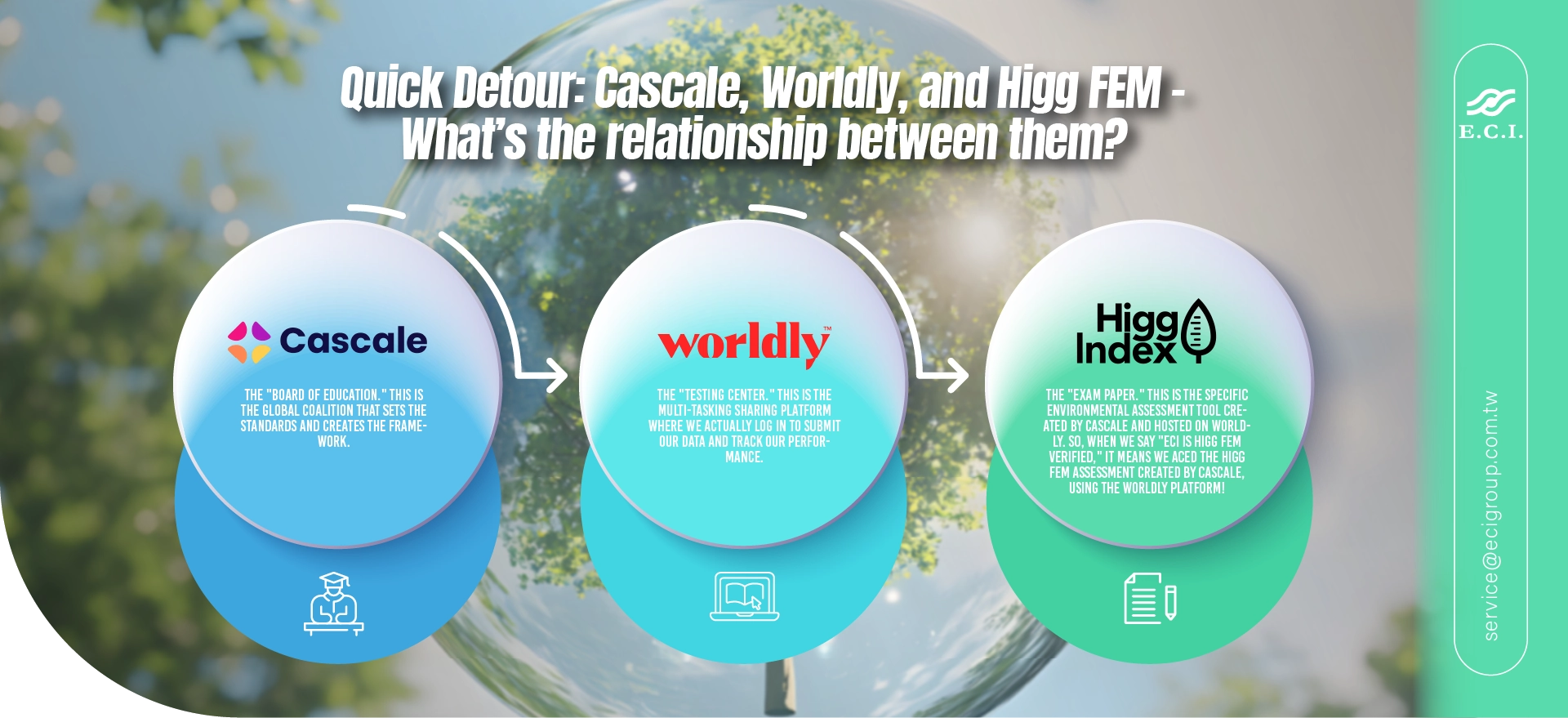
If you've spent any time in sustainable sourcing, you've probably encountered Cascale, Worldly, and Higg FEM in the same breath without a clear sense of how they relate. Think of it like a school exam system:
- Cascale (formerly SAC): The "Board of Education." This is the global coalition that sets the standards and creates the framework.
- Worldly: The "Testing Center." This is the multi-tasking sharing platform where we actually log in to submit our data and track our performance.
- Higg FEM: The "Exam Paper." This is the specific environmental assessment tool created by Cascale and hosted on Worldly.
So when ECI says we're Higg FEM verified, it means we completed and passed the Higg FEM assessment, created by Cascale, on the Worldly platform. Not just once, but annually, since 2019.
Higg FEM 101: What exactly is FEM?
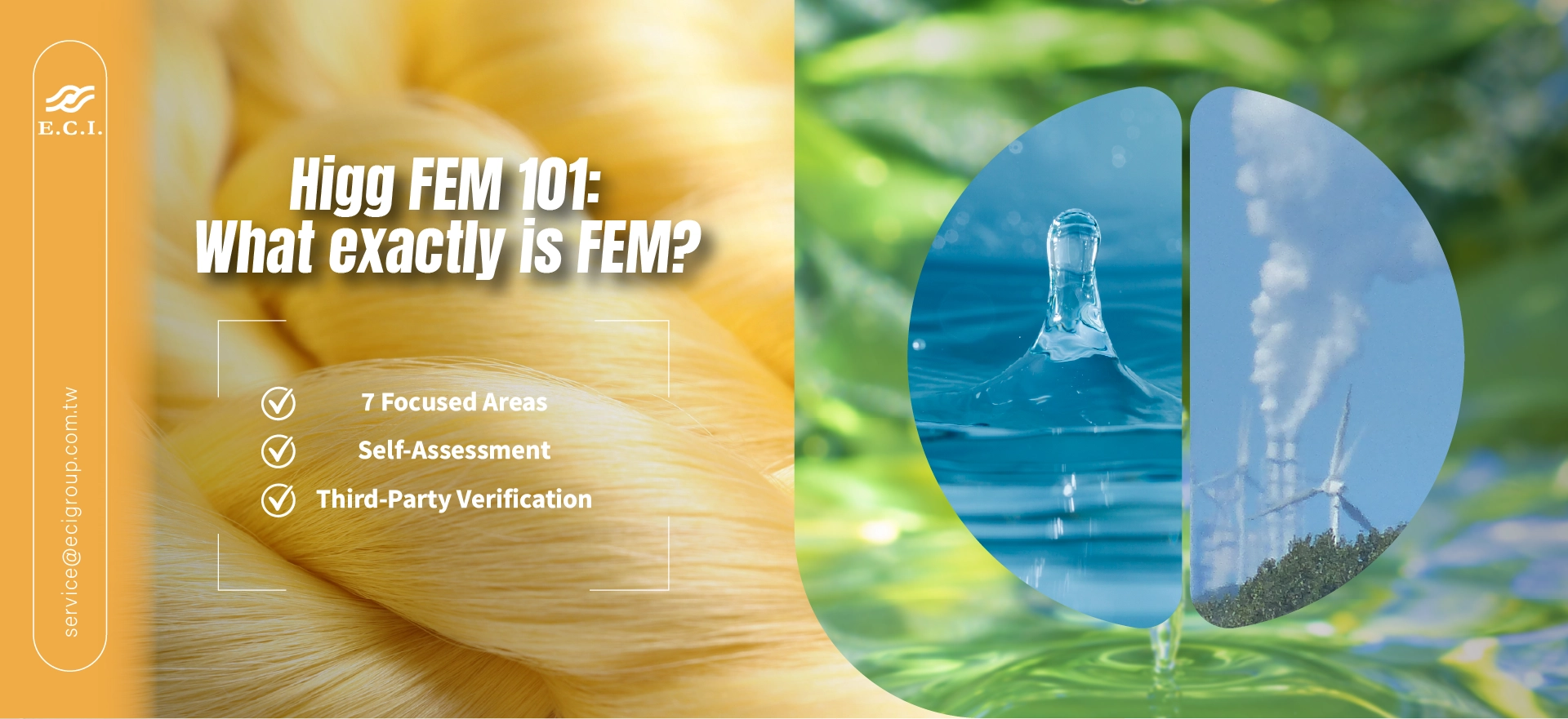
For anyone new to sustainable sourcing or launching a brand for the first time, Higg FEM is best described as the industry's most rigorous environmental performance audit. The process has three stages:
Seven focus areas: Factories answer hundreds of questions across Energy, Water, Waste, Chemical Management, and three additional environmental categories — covering the full footprint of a production facility.
Self-assessment: We track and submit our own environmental data across the full calendar year.
Third-party verification: An accredited, independent verifier visits on-site to audit our data and confirm its accuracy.
- Seven Focused Areas: Factories answer hundreds of questions across Energy, Water, Waste, Chemical Management, and three additional environmental categories — covering the full footprint of a production facility.
- Self-Assessment: We track and submit our own environmental data across the full calendar year.
- Third-Party Verification: An accredited, independent verifier visits on-site to audit our data and confirm its accuracy.
That last step is what gives Higg FEM its credibility. This isn't a certificate you purchase — it's a verified, evidence-based record of environmental performance.
Why We Treat It as a Management Tool, Not a Compliance Box
Beyond the annual Higg FEM cycle, many of the global brands we work with also carry their own Chemical and Legal Standards (CLS) requirements. That could sound like an endless documentation burden. It isn't, at least not if you approach it correctly.
At ECI, we've never treated this process as jumping through hoops to satisfy a brand requirement. We use it as a structured self-examination for our operations and leadership.
It challenges routine: The process forces us to look critically at the habits we take for granted: how we handle material offcuts, how machines are powered down at end of shift, and ask whether there's a smarter approach.
It creates systems: Those individual habits, once examined, can be standardised into traceable, optimised processes that hold up over time and across facilities.
The Takeaway for Brands Sourcing Elastic
Higg FEM verification since 2019 means our environmental performance isn't self-reported, it's independently audited, annually, against the most widely recognised standard in the industry. For brands building sustainable supply chains, it means the elastic components in your garments come with a verified environmental record behind them.
Sustainability in manufacturing isn't a destination. It's a continuous process of looking at what you do every day and finding ways to do it better. That's what Higg FEM gives us the structure to do — and what green manufacturing means to us in practice.