How Material Choices Tell Your Brand Story: A Strategic Guide to Elastic & Trim Sourcing
Here's something we see all the time: a brand invests six figures into gorgeous campaign photography, crafts the perfect sustainability manifesto, nails their Instagram aesthetic—and then ships a product with a scratchy elastic waistband that loses its stretch after three washes.
That waistband just rewrote their entire brand story. And not in a good way.
Why Material Selection Matters for Brand Storytelling
We've spent years in the narrow fabrics business, and there's a pattern we keep seeing: brands obsess over the main fabric (rightfully so), but treat the trims, the parts that actually touch your body, like an afterthought.
But here's the reality: your customer might see your brand on Instagram, but they feel your brand through that elastic tape pressing against their waist all day.
Psychologists call this "enclothed cognition"—basically, what we wear affects how we think and feel. A supportive nylon waistband makes the wearer feel ready to perform. A soft elastic in loungewear triggers comfort and relaxation. A recycled polyester drawcord with a natural texture? That's your sustainability story, no words needed.
The texture is the message.
The Touch Factor in Brand Building
Visual branding gets attention. But touch builds trust. When someone picks up a garment, they're instantly judging quality, durability, and value—all through their fingertips.
For elastic trims that grip the body (waistbands, cuffs, straps), this matters even more. A scratchy tag or uncomfortable waistband becomes a constant reminder of your brand—in the worst way. But a barely-there soft elastic? That creates positive associations that keep customers coming back.
The E-Commerce Challenge
Online shopping created an interesting problem: people buy based on pictures but decide to repurchase based on how things actually feel. You can promise "sustainable luxury" on your product page, but if the package arrives with stiff elastic that digs into skin, that promise falls apart.
We call this "tactile dissonance," and it kills customer loyalty faster than anything else.
But when the product feels even better than expected—when that recycled polyester tape feels as good as virgin material—you've earned real loyalty. That customer comes back and tells their friends.
Understanding Material Texture: Different Stories for Different Brands
Different textures send different messages. Think of them as brand voices—you wouldn't want a luxury brand sounding like a budget retailer, right? Same goes for how your materials feel.
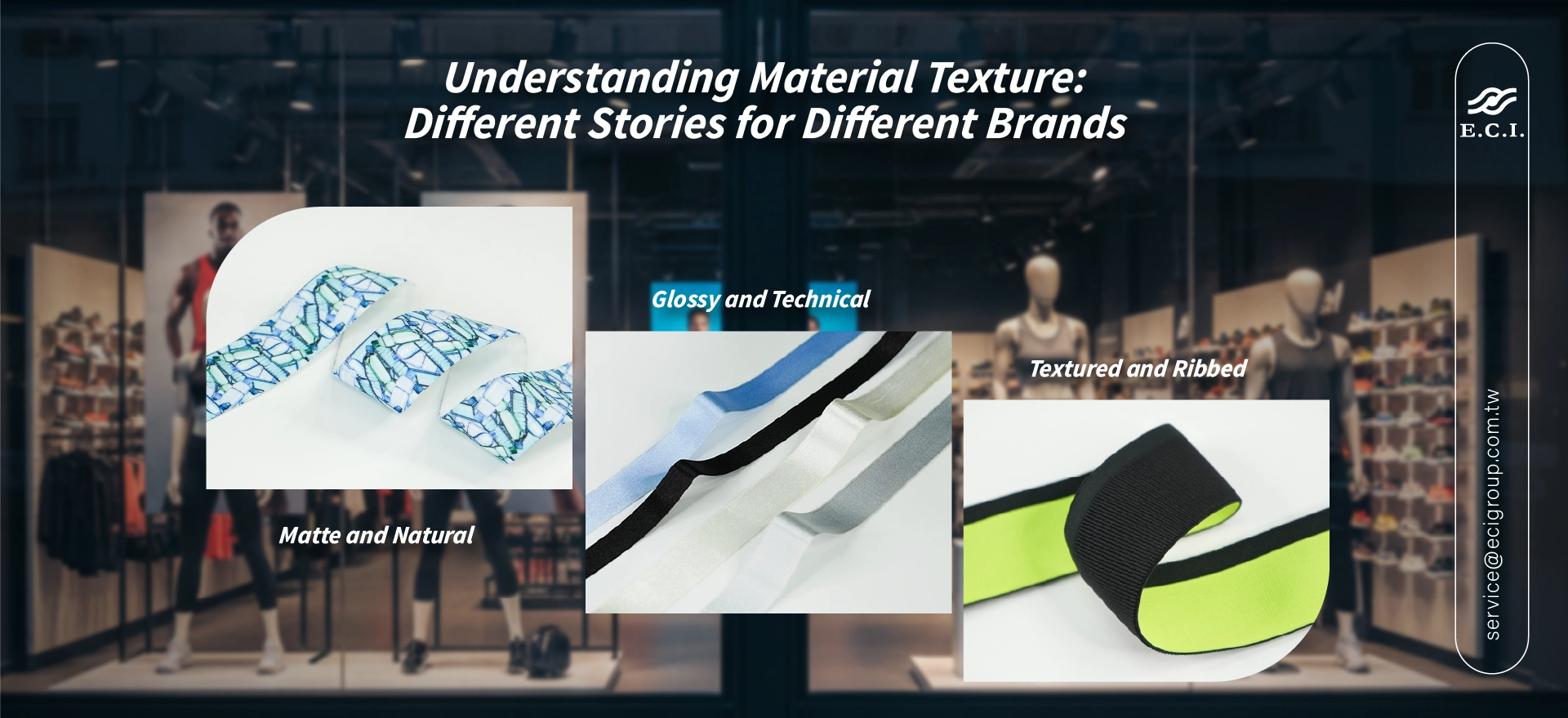
Matte and Natural: Matte finishes in recycled polyester or organic cotton say "authentic," "honest," and "unprocessed." This works perfectly for sustainable basics brands. No shine means no hiding—it signals transparency.
Glossy and Technical: High-gloss finishes suggest performance, innovation, and precision. But there's a fine line. Done right with quality materials, glossy reads as premium and technical. Done wrong, it looks cheap. The difference is usually in the quality of the yarn and how tightly it's woven.
Textured and Ribbed: Heavy, visible structures communicate durability and toughness. Perfect for outdoor and adventure brands. A ribbed waistband says "built to last." A smooth, seamless one says "designed to disappear."
Sustainable Material Selection: Moving Past Greenwashing
Here's the current challenge: people want sustainable products more than ever, but they trust sustainability claims less than ever. The EU is cracking down on vague "eco-friendly" language. Some brands are going quiet about their sustainability work to avoid scrutiny.
But staying quiet isn't the answer. Getting specific is.
Why Verification Matters
Instead of saying "eco-friendly elastics," successful brands are getting precise: "45% post-consumer recycled polyester, GRS-certified, with 59% lower carbon footprint than virgin materials." That level of detail turns skepticism into trust.
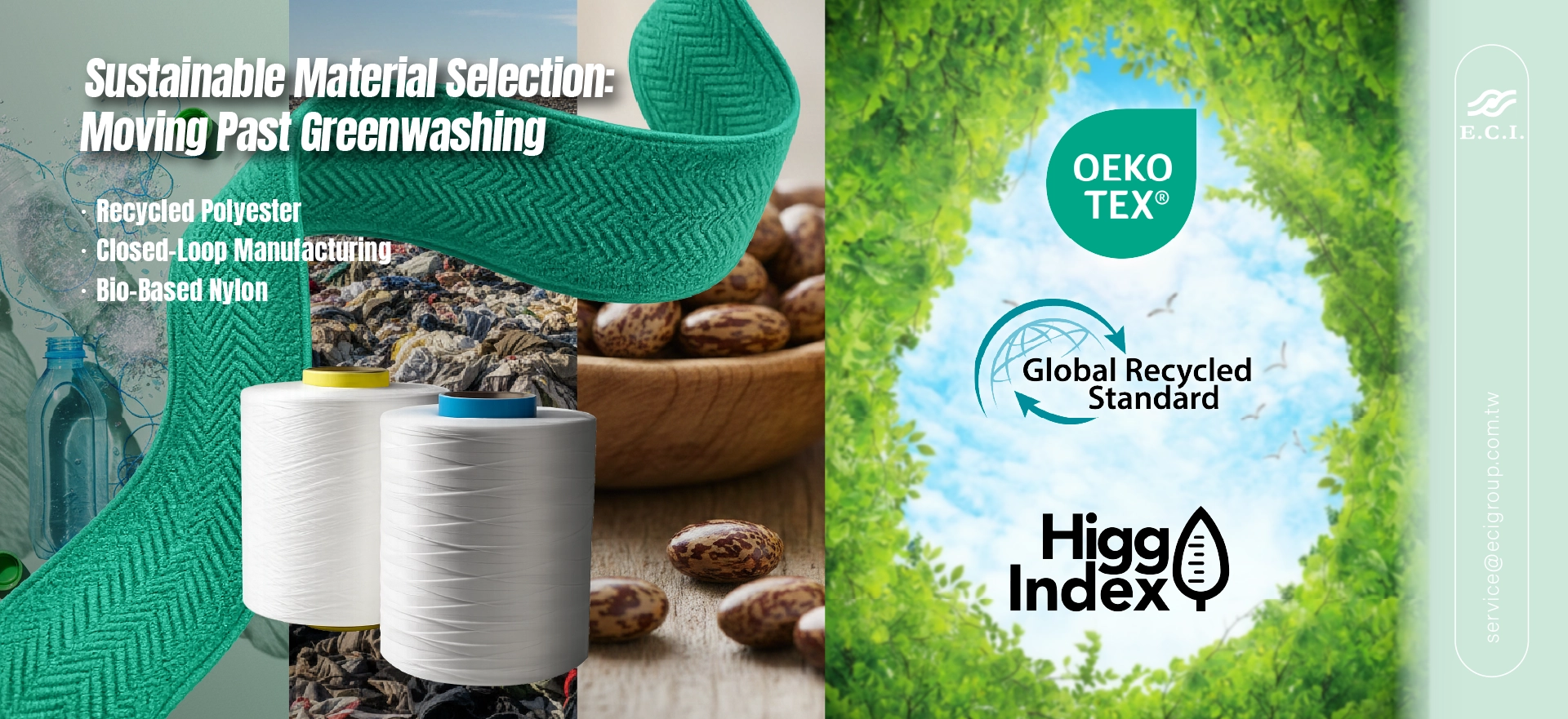
Third-party certifications—like OEKO-TEX® Standard 100, Global Recycled Standard (GRS), and Higg Index scores—aren't just paperwork. They're marketing tools that prove your claims. Some brands are even adding QR codes to tags so customers can verify everything themselves.
Recycled Polyester: Better Than You Think
Recycled polyester (rPET) used to be seen as a compromise. Not anymore. Here's what most people don't know: high-quality recycled polyester elastic performs just as well as virgin material. Same stretch, same durability, same feel—but with 59% less energy used in production.
Modern rPET maintains 90-95% recovery rates, meaning it bounces back to shape just like virgin polyester. The story becomes simple: "Same performance, lower impact."
One concern worth addressing: microplastic shedding. Quality matters here. High-quality continuous yarns with tight weaving shed far less than cheaper alternatives. This becomes part of the story—you're designing for lower environmental impact from the start.
Closed-Loop Manufacturing: The Next Level
This is where things get interesting. Instead of just using recycled materials from outside sources, some manufacturers are creating closed-loop systems—collecting their own production scrap and turning it into new materials.
This creates unique, multi-toned textures where no two batches look exactly alike. That "imperfection" becomes a feature, not a bug. It's visual proof of circularity, similar to the visible mending trend in sustainable fashion.
The story practically writes itself: "Zero waste manufacturing" that turns would-be trash into something unique and valuable.
Bio-Based Nylon: Performance Meets Sustainability
Bio-based nylons (like Nylon 610 and 512) are game-changers. They're made from renewable sources like castor oil but perform like traditional synthetic materials, sometimes even better.
This solves the old "green vs. great" problem where people worried sustainable products wouldn't hold up.
Nylon 610: The Performance Upgrade
The moisture absorption rate is lower than that of ordinary nylon, and it can maintain size and structural stability even in a humid conditions. For swimsuits and high activity sportswear, it can effectively reduce deformation and skin discomfort.
Marketers can use it to position their apparel with the marketing angle: “Bring a drier and more stable wearing experience."
Nylon 512: The Luxury Option
The touch is delicate and soft, the dyeing performance is excellent, and the color is saturated and uniform. Specially suitable for high-end close fitting underwear and products that require skin friendly touch, allowing sustainable materials to naturally blend into high-quality design.
Marketers can use Nylon 512 to help strengthen their brand stories based on sustainable materials that redefine intimate luxury.
Performance Materials for Premium Brands
If recycled polyester is the reliable workhorse, nylon is the premium option. For activewear and high-end lingerie, nylon signals quality. It's more abrasion-resistant, recovers better, and feels softer than polyester.
Why Recovery Matters
"Recovery" is the key metric—how well elastic snaps back after stretching. Poor recovery means leggings that slide down and waistbands that roll. High-quality nylon elastic engineered for repeated use translates directly to "long-lasting fit" and "shape retention."
This isn't just about function. It's about brand values. A waistband that maintains its performance after hundreds of washes tells customers you're building things to last, not designing for obsolescence.
Functional Upgrades: Wicking and Cooling
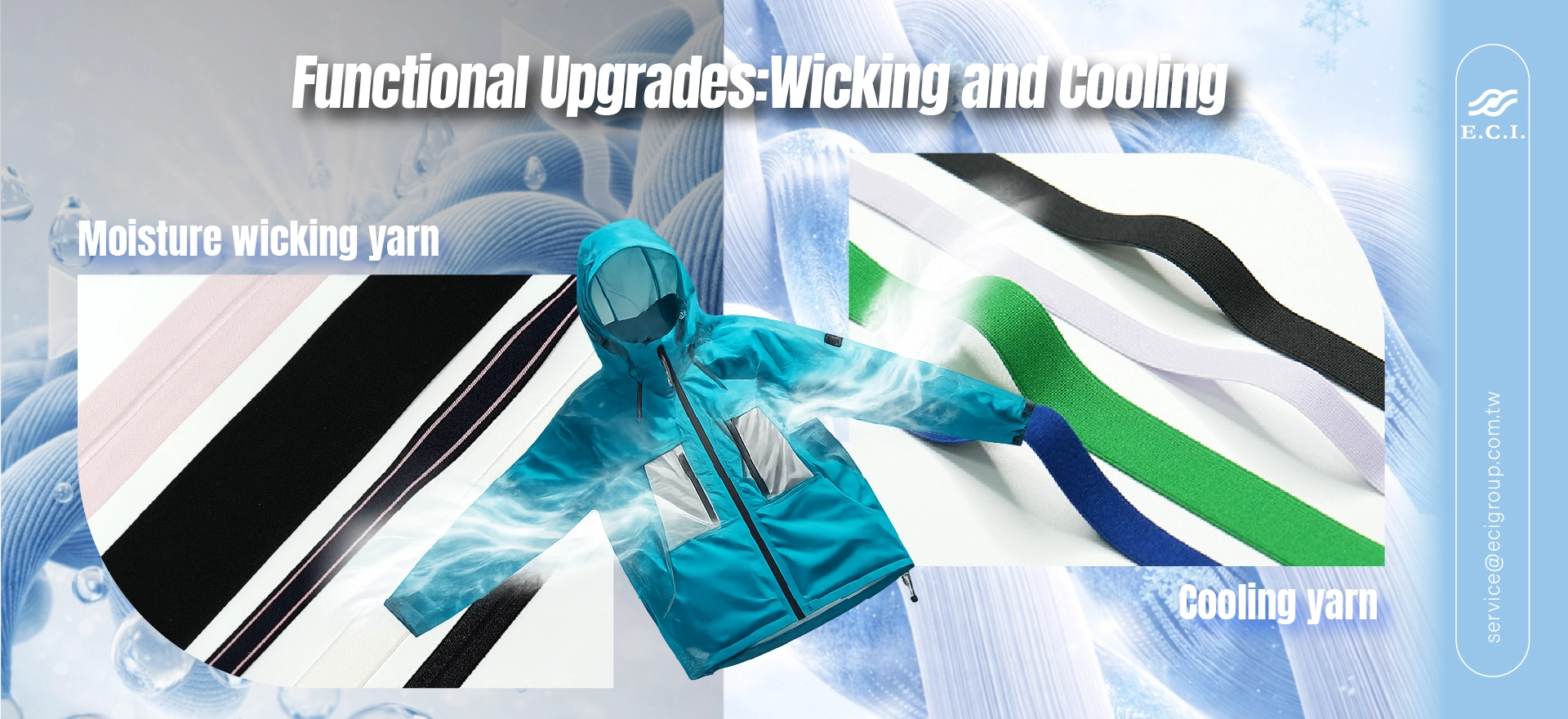
Adding functional yarns transforms trims from passive parts to active features. Moisture-wicking waistbands prevent that sweaty band feeling. The story: you've thought about comfort so customers don't have to.
Cooling yarns (with embedded minerals) can be marketed around wellness and recovery—the garment actively helps with temperature regulation. This positions brands in the growing "performance wellness" space.
Luxury in the Details
In luxury apparel, the best details are often invisible. Heat-bonded, tagless finishes? Fold-over elastic that creates clean edges? That's engineering as luxury—smooth, seamless, effortless.
Jacquard Weaving: Built-In Branding
When you do make trims visible, make them count. Jacquard weaving creates logos and patterns woven directly into the elastic—not printed on top. Think Calvin Klein waistbands or Supreme details.
The design is permanent. It won't crack, fade, or peel because it's structural. For luxury streetwear, this lets the trim function as both support and signature.
Soft-Touch: The Invisible Experience
Ultra-fine yarns create elastics that feel like silk but stretch like spandex. For intimate apparel, this supports the "barely there" luxury story—the best products are the ones you forget you're wearing.
Quality shows in the details: more threads per inch creates smoother surfaces that reflect light evenly. This is the difference between "shiny cheap" and "luxurious"—and it justifies premium pricing.
Matching Materials to Your Brand
Let's make this practical. Here's how to think about material choices based on your brand positioning:
Performance Brands
Core message: "This gear works as hard as you do"
Material approach:
- High-tenacity nylon for durability
- Moisture-wicking elastic tapes
- Tight weaves for maximum support and recovery
- Bold jacquard logos and functional grip details
- Sustainability angle: Recycled nylon showing strength doesn't require waste
Sustainable Basics
Core message: "Gentle on you, gentle on the planet"
Material approach:
- GRS-certified recycled polyester
- Bio-based materials and biodegradable options
- Softer knit elastics for comfort
- Matte finishes and closed-loop materials showing zero-waste commitment
- Sustainability angle: Full transparency with supply chain data
Luxury & Designer (Premium Lingerie, Designer Streetwear)
Core message: "Uncompromising detail"
Material approach:
- Custom jacquard with intricate designs
- Ultra-soft touch elastics for premium feel
- Double-sided tapes for versatility
- Subtle embossed branding
- Sustainability angle: Quality as sustainability—built to last using premium recycled materials
Making It Actionable
If you're making material sourcing decisions, here's where to start:
1. Do a Touch Test
Audit your current products honestly. Does everything feel as good as your brand promises? Start with high-contact areas—waistbands, straps, cuffs.
2. Use Your Data
Don't just buy certified materials—tell that story. Turn GRS certificates and carbon data into customer-facing content. Transparency builds trust.
3. Talk About the Invisible
Most brands ignore trims in their marketing. Don't. "Why We Chose This Waistband" makes compelling content that educates customers and justifies pricing.
4. Embrace Circularity
If you're using closed-loop materials, make it a collection story. The unique variations become a feature. "No two are exactly alike" adds value.
5. Get Ready for Digital Passports
Start collecting component-level data now. Work with suppliers who maintain certifications. Being early gives you a competitive advantage.
The Bottom Line
Here's what it comes down to: your material choices are your brand choices.
That elastic waistband isn't just holding up pants—it's telling a story about who you are as a brand every time someone wears your product. The decision to use recycled polyester says something. The choice of bio-based nylon says something. Even the finish—matte or glossy—communicates values.
Today's customers are smart and skeptical. They can feel the difference between a brand cutting corners and one that sweats the details. They want verified sustainability claims and products that perform without compromise.
The question every brand needs to answer: What story is your waistband telling?
Ready to align your materials with your brand story?
Explore sustainable elastic and trim options—from GRS-certified recycled polyester to bio-based nylon. Get in touch to discuss material strategies for your next collection.