Silicone Grip Elastic: How Non-Slip Coatings Keep Performance Apparel in Place
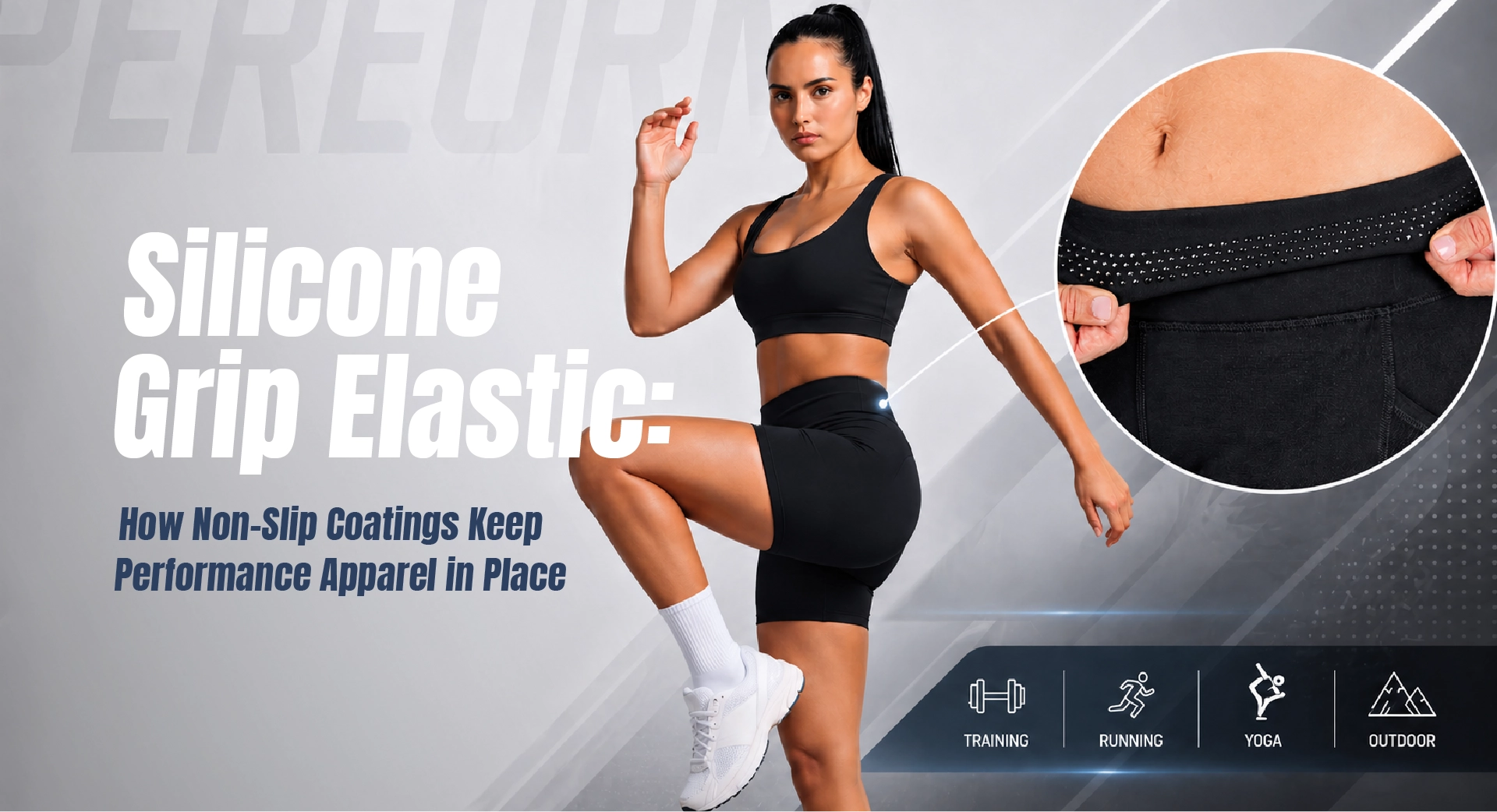 Every athlete knows the feeling: halfway through a workout, the waistband starts sliding. Every cyclist has dealt with a jersey hem that rides up under effort. These are not just comfort issues, they are product failures. When elastic components shift during movement, they create friction, distraction, and a perception that the garment was poorly made.
Silicone grip elastic solves this problem by applying a thin layer of silicone to the skin-facing surface of the elastic tape. The silicone creates friction against the wearer’s skin without adhesive bonding, holding the elastic in position during dynamic movement while remaining comfortable to wear. It is a deceptively simple technology that has become essential in performance apparel, activewear, cycling, lingerie, and medical textiles.
This guide explains how silicone grip elastic works, what coating options are available, where it is used, and what product developers need to specify when sourcing it.
How Silicone Grip Elastic Works
A thin layer of medical or textile-grade silicone is applied to one surface of the elastic tape, typically the side that sits against the wearer’s skin. When the garment is worn, the silicone creates a high-friction interface between the elastic and the skin surface. This friction resists the sliding and migration forces that occur during body movement, keeping the elastic anchored in position.
Crucially, silicone grip is not sticky. Unlike adhesive strips, silicone coatings do not bond to the skin or leave residue. They work purely through surface friction, which means they can be repositioned, are comfortable for extended wear, and maintain their grip performance through repeated wash cycles. The silicone remains flexible and does not crack, harden, or degrade under normal laundering conditions.
This is what makes silicone grip elastic different from other stay-put solutions like drawcords, internal ties, or shaped seaming. It provides invisible, continuous grip across the full width of the elastic without adding bulk, visible hardware, or construction complexity.
Types of Silicone Coating Patterns
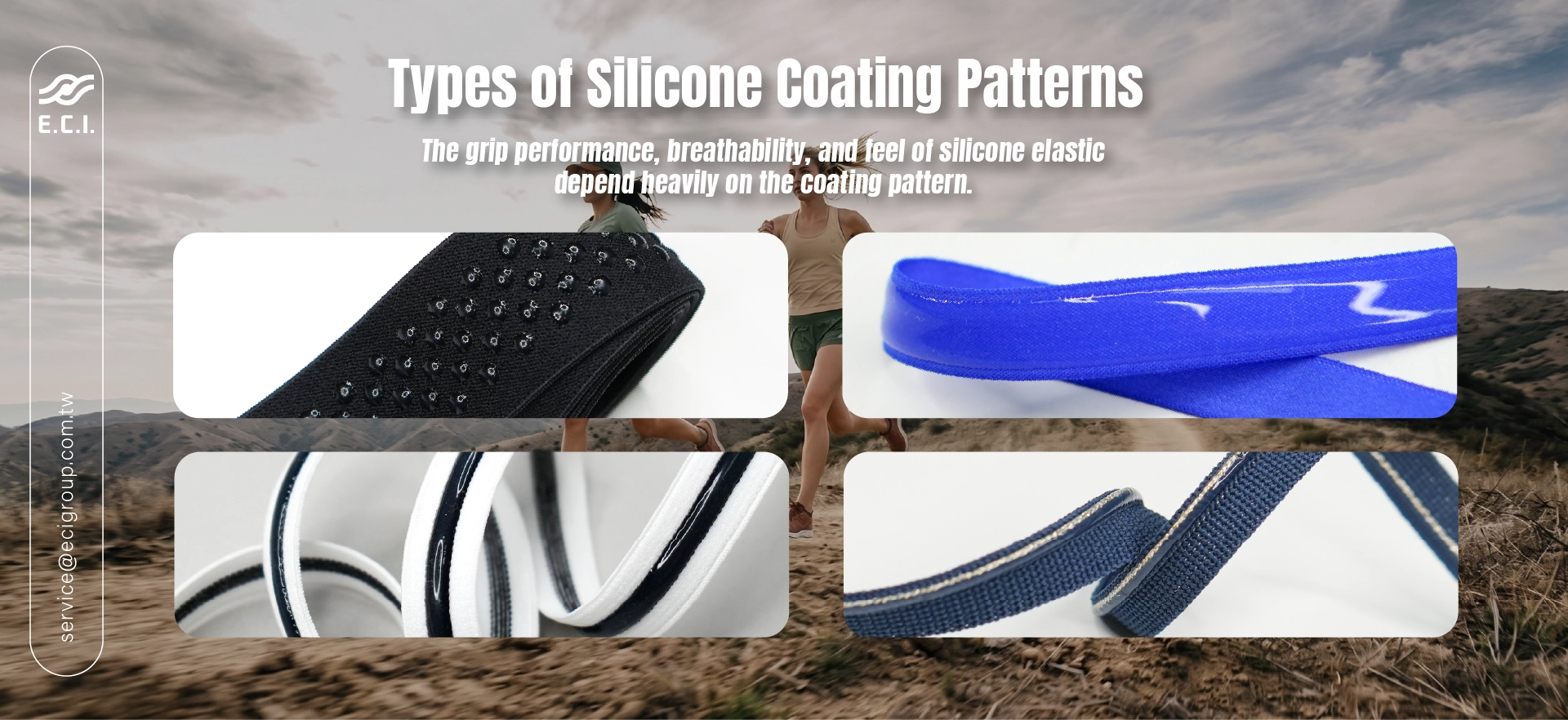
The grip performance, breathability, and feel of silicone elastic depend heavily on the coating pattern. Manufacturers offer several standard configurations:
Dot Pattern
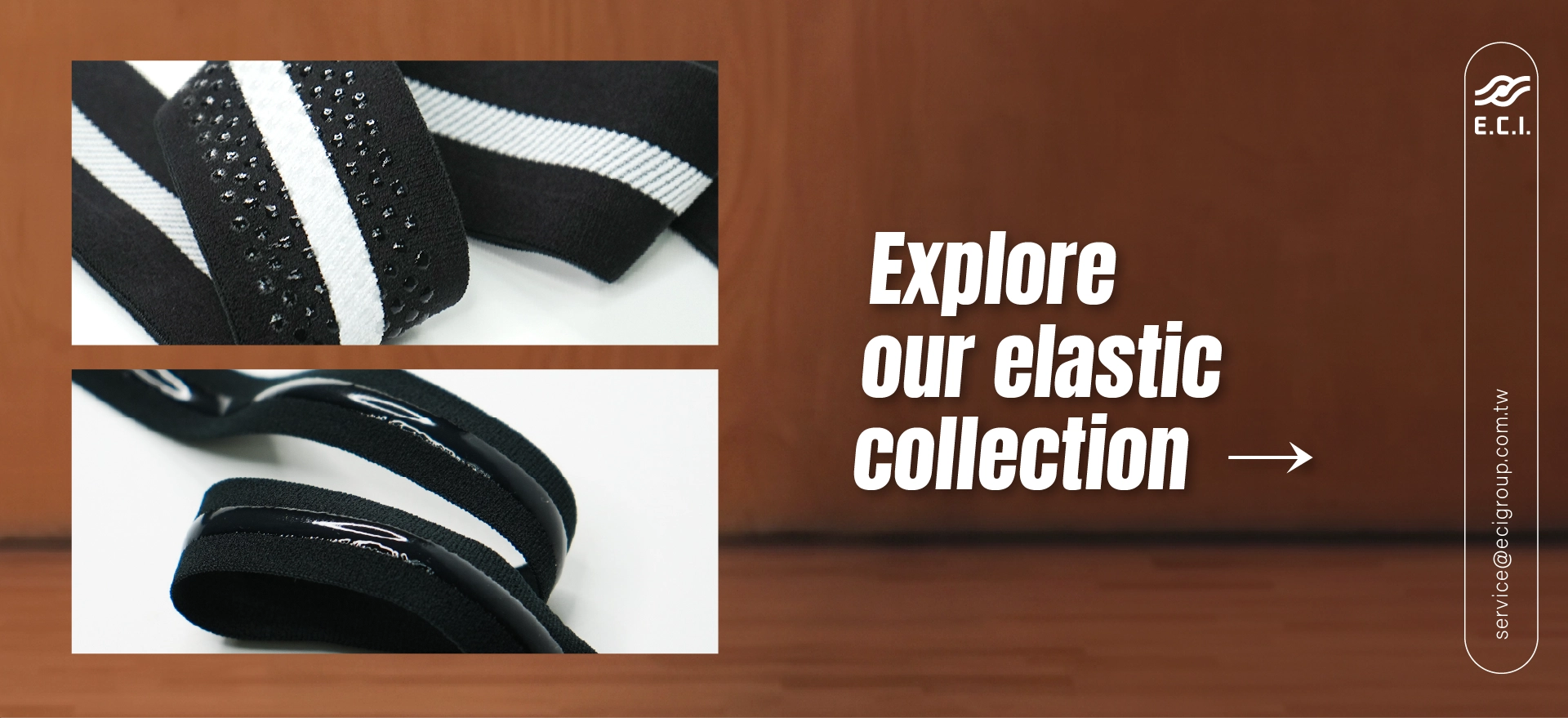
Individual silicone dots are printed in a grid or staggered pattern across the elastic surface. Dot patterns are the most widely used configuration because they balance grip performance with breathability. The spaces between dots allow air circulation and moisture transport, which matters in activewear applications. Dot size and spacing can be adjusted to fine-tune the grip level—smaller, closer dots provide more grip; larger, spaced dots allow more airflow.
Best suited for: waistbands, hem bands, cycling shorts, running apparel, and any application where breathability is important alongside grip.
Line Pattern
Continuous silicone lines run across the width or along the length of the elastic. Line patterns provide higher grip force per unit area than dots because the contact surface is continuous along each line. They are common in applications where maximum hold is the priority, such as cycling bib straps, compression sleeves, and garments worn during high-intensity rotational movement.
Best suited for: cycling bibs, compression garments, sport bras, and applications requiring maximum grip force.
All-Over (Solid) Coating
The entire surface is coated with a continuous silicone layer. This provides the highest possible grip but reduces breathability to near zero on the coated surface. All-over coating is used in medical applications (compression stockings, wound dressings, prosthetic sockets) and specialized sports applications where maximum grip outweighs ventilation concerns.
Best suited for: medical and compression textiles, prosthetics, strapless garments, and specialty applications.
Custom and Logo Patterns
Silicone can be applied in custom shapes, including brand logos, text, and decorative patterns. This serves a dual purpose: functional grip and visible branding on the elastic interior. When the waistband is folded over during wear—as it often is in yoga pants and leggings—the silicone logo becomes visible, turning a functional element into a brand touchpoint.
Best suited for: premium activewear, branded yoga and athleisure, and any product where the interior finish is a selling point.
Where Silicone Grip Elastic Is Used
| Applications |
Why Grip Matters |
Typical Coating |
Typical Width |
|
Activewear waistbands |
Prevents ride-down during squats, runs, and dynamic movement |
Dot pattern |
20–40 mm |
|
Cycling shorts & bibs |
Holds leg grippers and bib straps under sustained pedaling |
Line or dot pattern |
25–50 mm |
|
Sport bras |
Keeps underband from riding up during high-impact activity |
Line or dot pattern |
15–30 mm |
|
Compression garments |
Maintains garment position for consistent therapeutic pressure |
All-over or line |
20–50 mm |
|
Yoga & leggings |
Stops waistband fold-over and slip during inverted poses |
Dot or logo pattern |
25–40 mm |
|
Medical stockings |
Holds thigh-high stockings without garters or adhesive |
All-over |
30–60 mm |
|
Soccer/rugby socks |
Prevents sock slip inside boots during play |
Dot pattern |
15–25 mm |
|
Strapless garments |
Secures bodice without boning or rigid structure |
Line or all-over |
10–20 mm |
The common thread across all these applications is the same: the elastic must stay in position during dynamic movement without relying on excessive compression, adhesive, or hardware.
What to Specify When Sourcing Silicone Grip Elastic
Getting the right silicone grip elastic requires specifying more than just “add silicone.” Product developers should clearly communicate these parameters to their supplier:
- Coating pattern and coverage — Dot, line, all-over, or custom? What percentage of the surface should be coated? Higher coverage means more grip but less breathability.
- Silicone type — Standard textile-grade silicone is suitable for most apparel. Medical-grade silicone is required for products with direct skin contact in clinical applications. Ensure the silicone is OEKO-TEX compliant for skin-contact apparel.
- Dot/line dimensions — Dot diameter, line width, and spacing between elements all affect grip force and hand feel. Smaller dots feel smoother against skin; larger dots provide more aggressive hold.
- Base elastic specifications — The silicone is applied onto an existing elastic tape. Specify the base tape’s width, stretch percentage, recovery rate, and material composition independently of the coating.
- Wash durability requirements — How many wash cycles must the silicone survive without significant grip loss? Performance apparel typically requires 50+ wash cycles. Request wash-test data from the supplier.
- Color — Silicone can be pigmented to match the elastic color (common in lingerie and premium activewear) or left translucent/clear (standard in most performance applications).
Always request a sewn sample with the silicone elastic applied to the actual garment fabric. Grip performance varies depending on the skin-contact surface of the elastic and the fabric it is sewn into—testing on the final construction is the only reliable way to validate.
Spotlight: ECI Elastic’s Silicone Coating Capabilities
At ECI Elastic, silicone coating is one of our core finishing capabilities. As a vertically integrated manufacturer, we apply silicone coatings in-house on our own elastic tapes—meaning the base elastic and the coating are produced, tested, and quality-controlled under one roof.
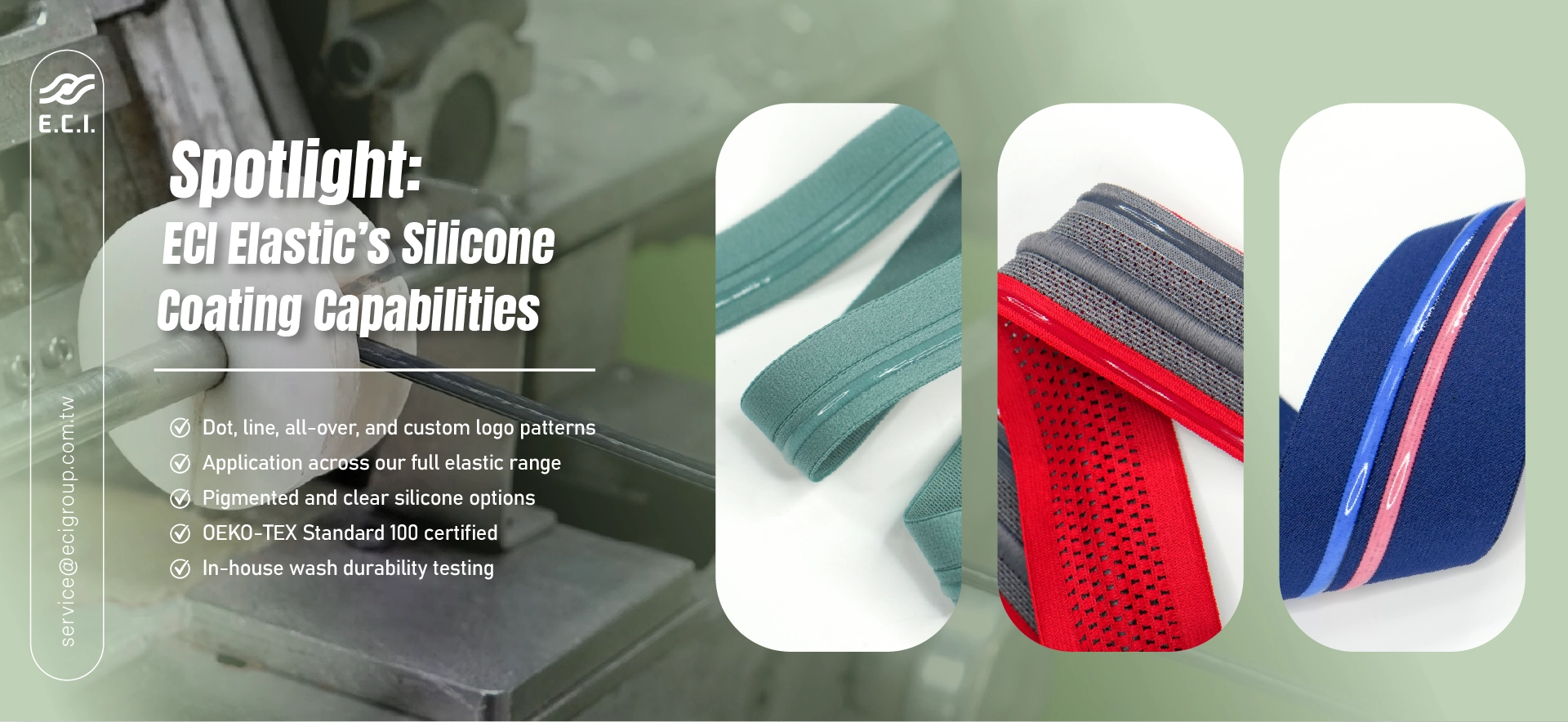
Our silicone coating capabilities include:
- Dot, line, all-over, and custom logo patterns — including custom silicone-printed branding for premium activewear and athleisure brands
- Application across our full elastic range — silicone can be applied to waistband elastic, inner elastic, bra straps, fold-over elastic, and specialty tapes
- Pigmented and clear silicone options — color-matched to Pantone specifications or translucent for an invisible finish
- OEKO-TEX Standard 100 certified — all silicone materials are tested for harmful substances and certified safe for direct skin contact
- In-house wash durability testing — grip retention validated through repeated wash cycles in our testing laboratory before production shipment
Because we control both the elastic tape production and the silicone application process, we can engineer the base elastic and the coating as an integrated system, optimizing stretch, recovery, grip force, and hand feel together rather than treating them as separate specifications. Contact our team to discuss your silicone grip elastic requirements or request samples.
Frequently Asked Questions
What is silicone grip elastic?
Silicone grip elastic is an elastic tape with a thin layer of silicone applied to one surface—typically the side that contacts the wearer’s skin. The silicone creates friction that holds the elastic in position during movement, preventing waistbands, leg bands, bra straps, and other elastic components from sliding or riding up. Unlike adhesive strips, silicone grip is non-bonding, comfortable for extended wear, and durable through repeated washing.
Does silicone grip elastic lose its grip over time?
Quality silicone grip elastic maintains its grip performance through 50 or more wash cycles when properly manufactured. The silicone should be flexible and resilient, not brittle or prone to cracking. Grip degradation is typically caused by low-quality silicone formulations or insufficient curing during production. Always request wash-durability test data from your supplier before approving for bulk production.
Is silicone grip elastic safe for sensitive skin?
Yes, when the silicone meets textile safety standards. OEKO-TEX Standard 100 certified silicone has been tested for harmful substances and is safe for direct skin contact, including in children’s apparel. Medical-grade silicone is available for clinical applications like compression stockings and wound care. Allergic reactions to textile-grade silicone are extremely rare.
Can silicone grip elastic be used with printed or branded designs?
Yes. Silicone can be applied in custom patterns including brand logos, text, and decorative designs. The silicone itself can be pigmented to match the elastic color or to contrast for visual effect. This is commonly used in premium activewear where the waistband interior is visible when folded during wear—turning a functional grip element into a branding opportunity.
What is the difference between silicone dots and silicone lines on elastic?
Dot patterns provide grip while maintaining breathability through the spaces between dots. They are the most versatile option for activewear. Line patterns provide higher grip force per unit area because the contact surface is continuous along each line, making them better suited for high-intensity applications like cycling bibs and compression garments. The choice depends on whether breathability or maximum grip is the higher priority.
Ready to Add Silicone Grip to Your Elastic Components?
Silicone grip elastic is one of those product details that separates performance apparel from ordinary apparel. The right coating pattern, applied to the right elastic, can eliminate one of the most common fit complaints in activewear—without adding bulk, cost, or construction complexity.
To explore ECI Elastic’s silicone coating options across our full range of elastic tapes, view our silicone coating capabilities or request a sample kit to evaluate silicone grip elastic firsthand.
OTHER NEWS
Lightweight Breathable Webbing: Structure, Breathability, Support and Applications

What Does SS27 Mean? Fashion Season Codes and the Designer Vocabulary That Comes With Them